Richard Mille
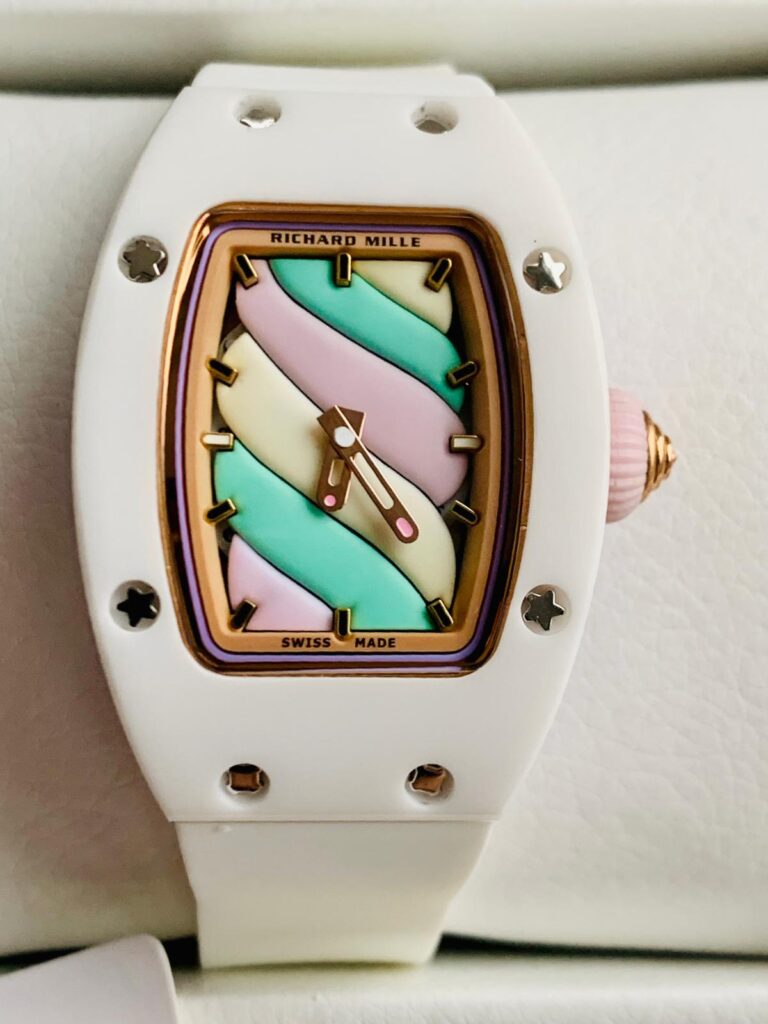
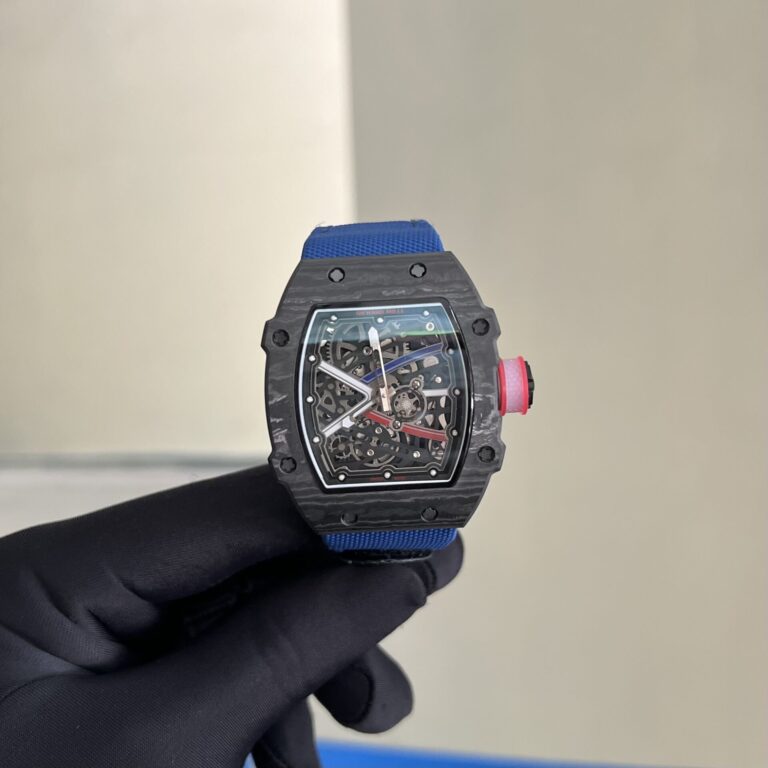
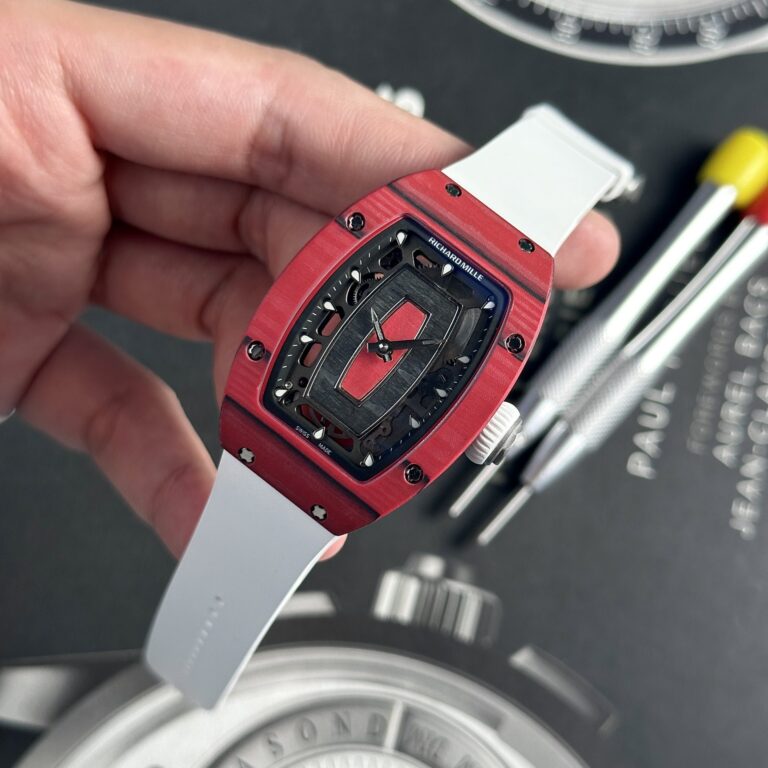
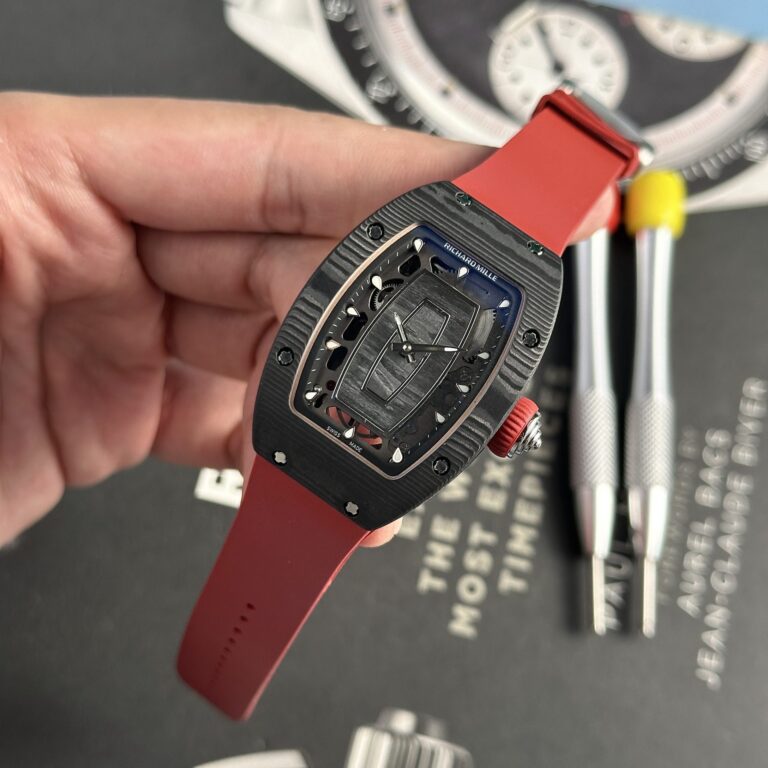
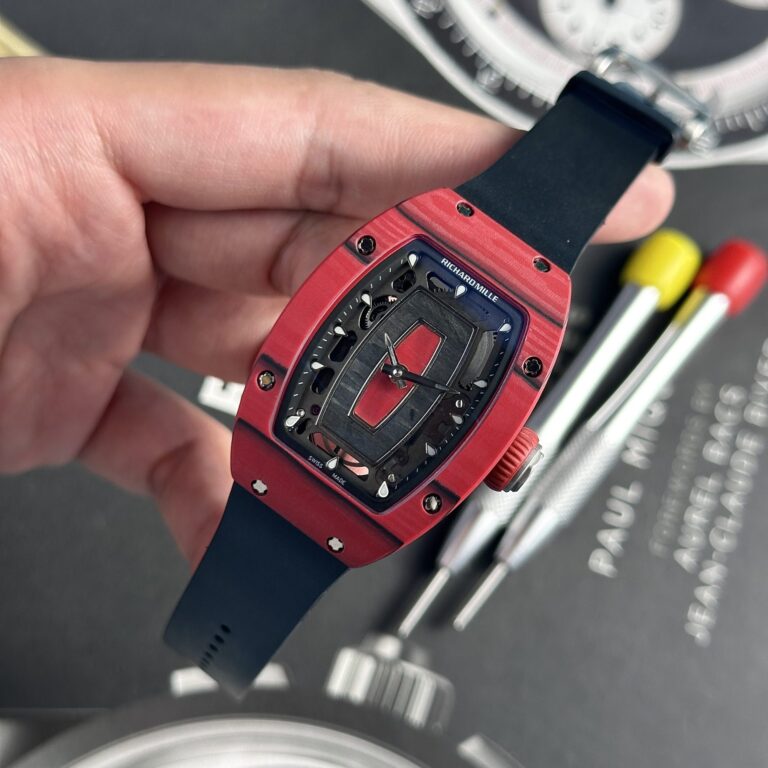
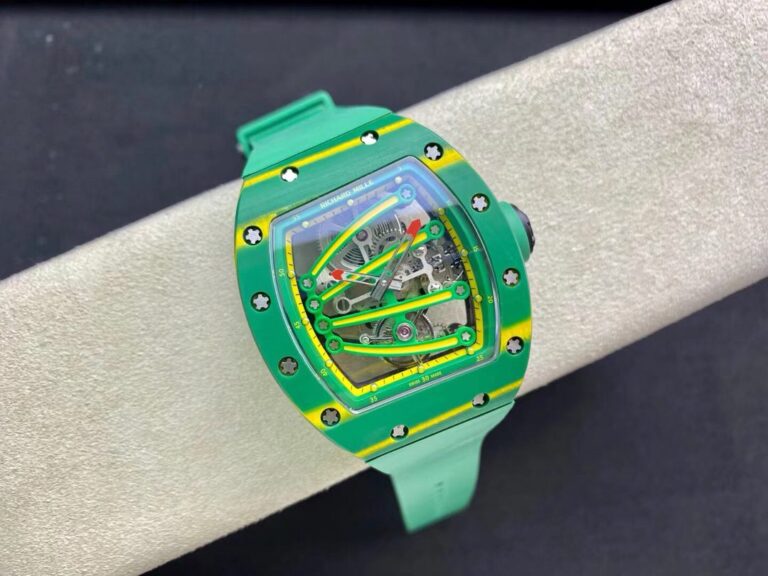
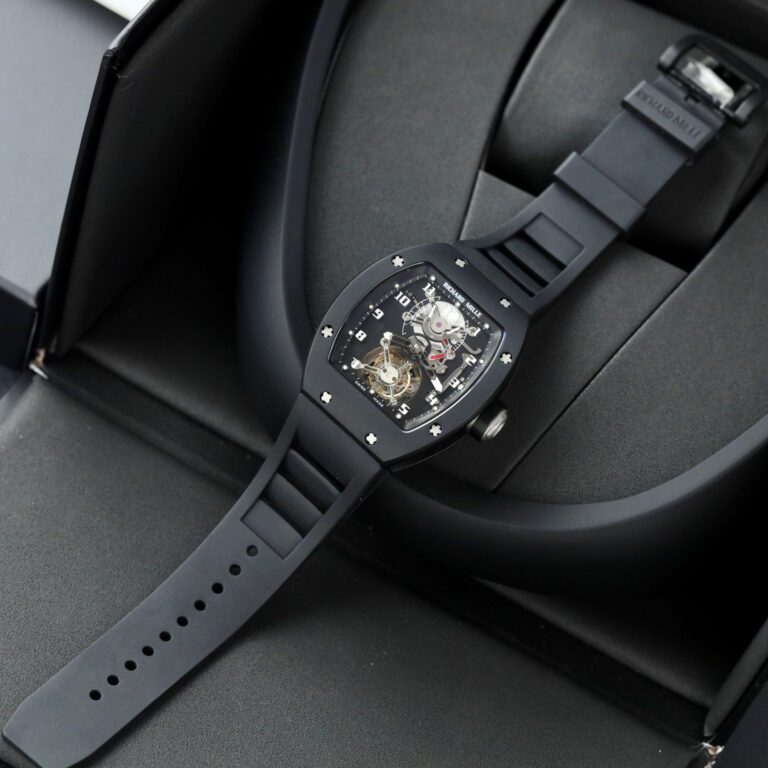
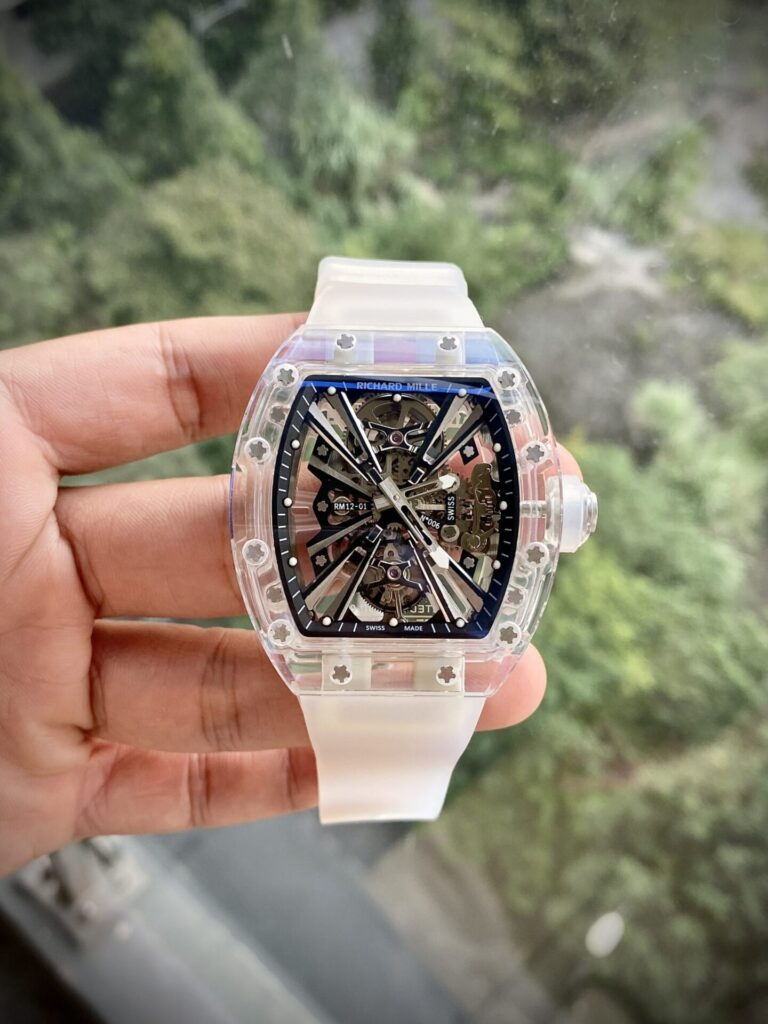
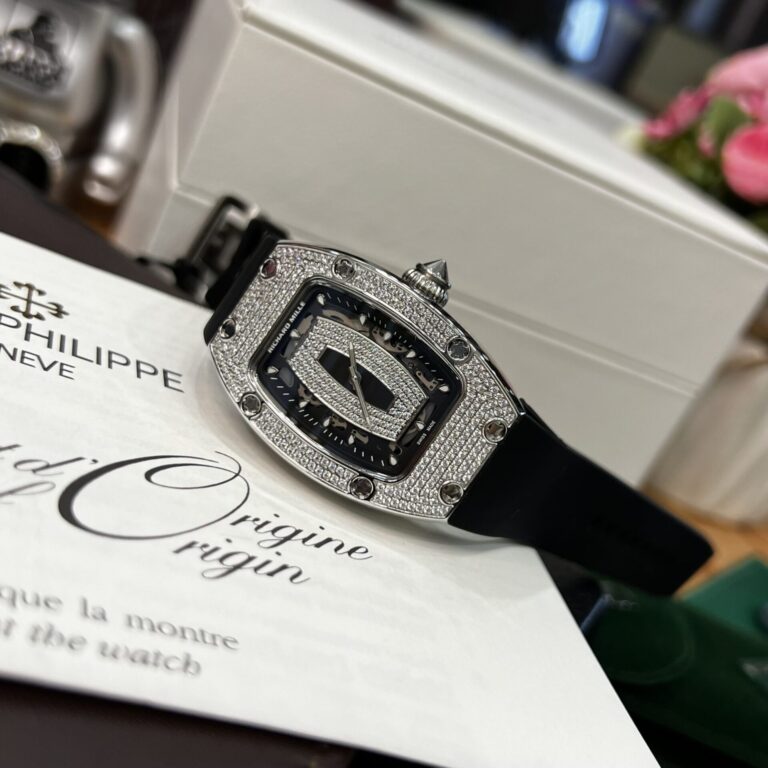
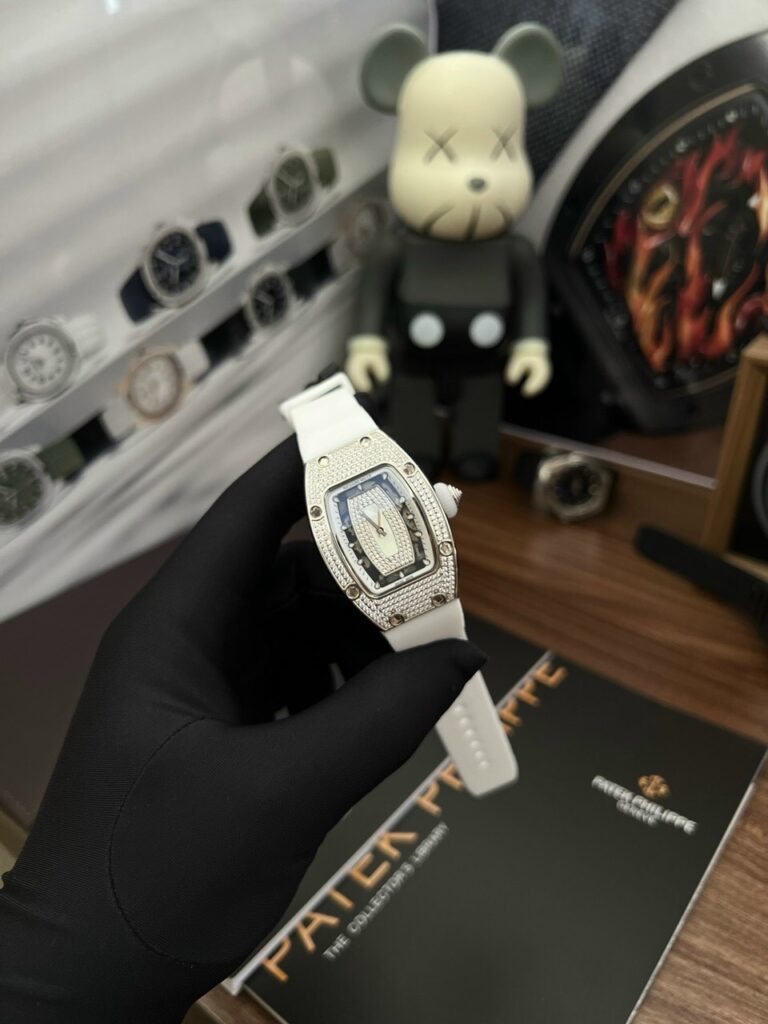
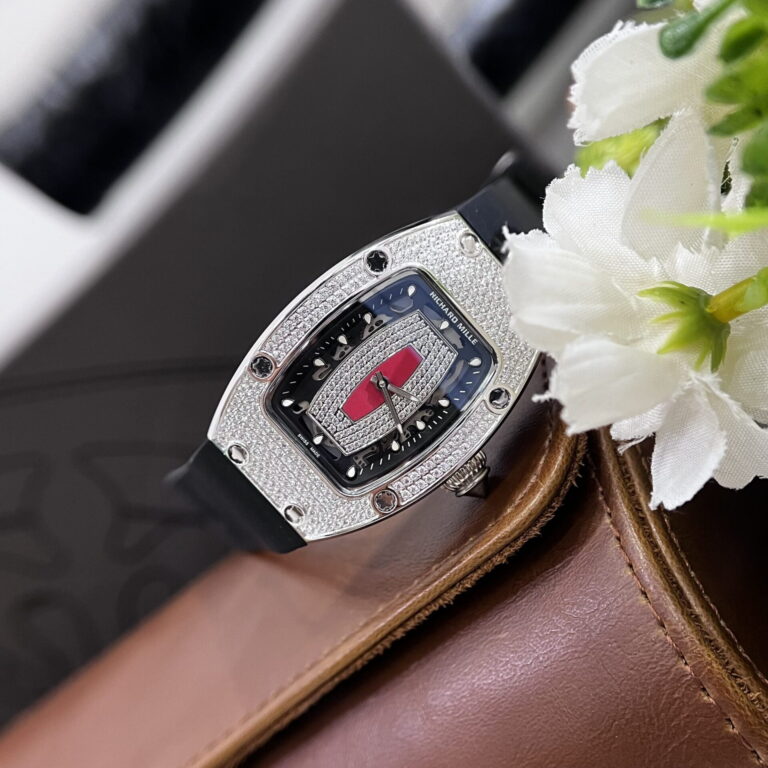
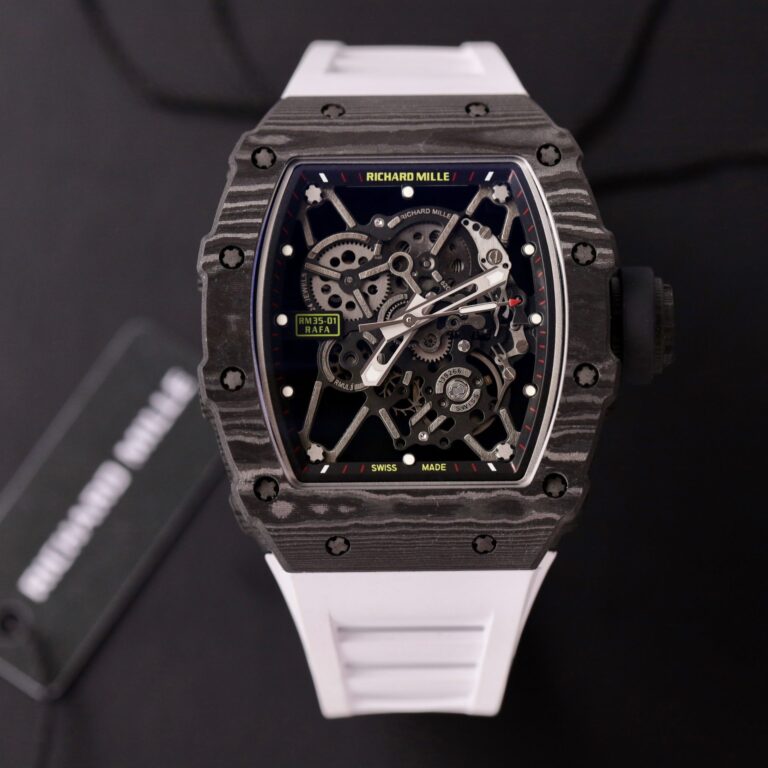
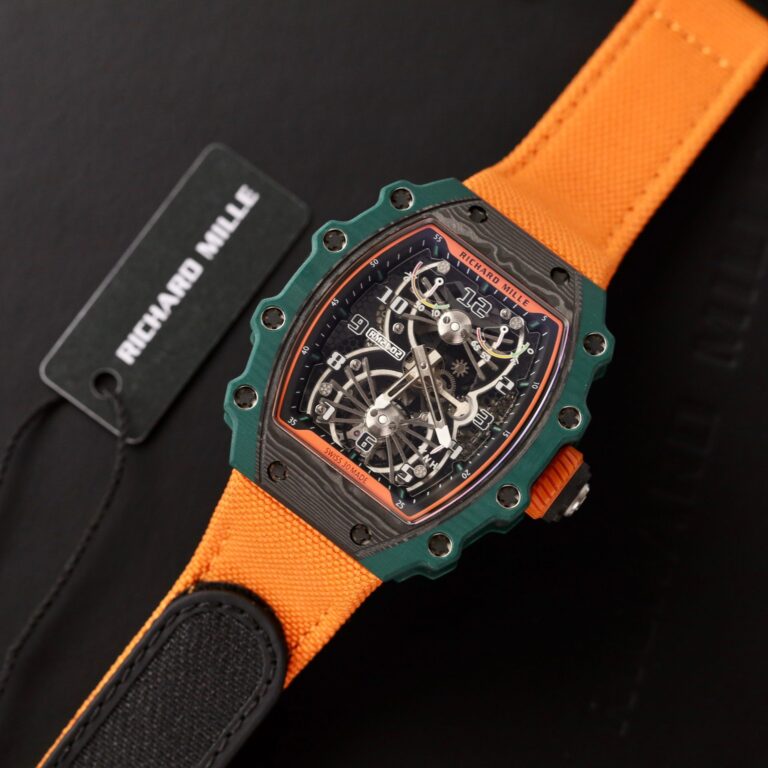
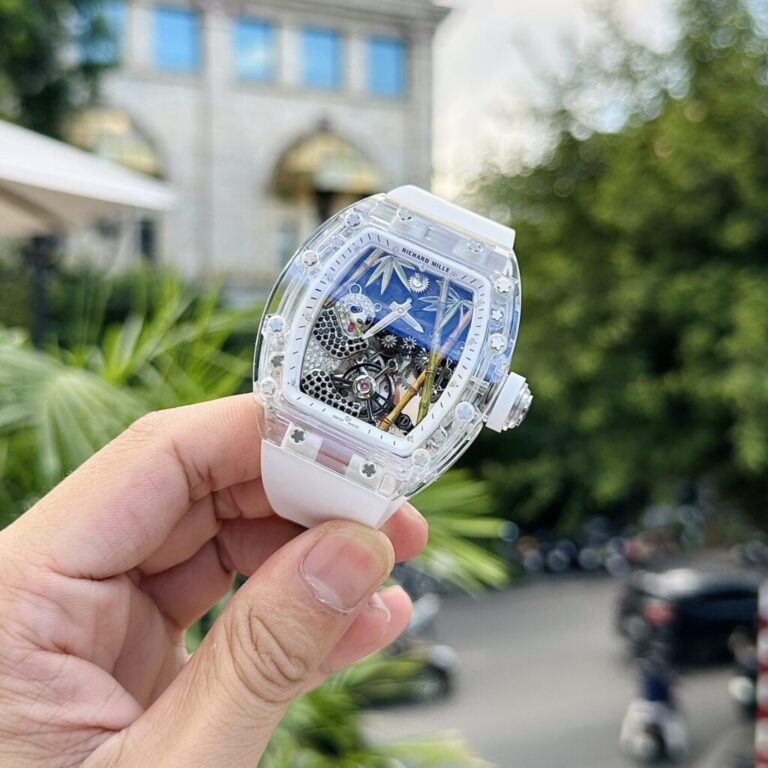
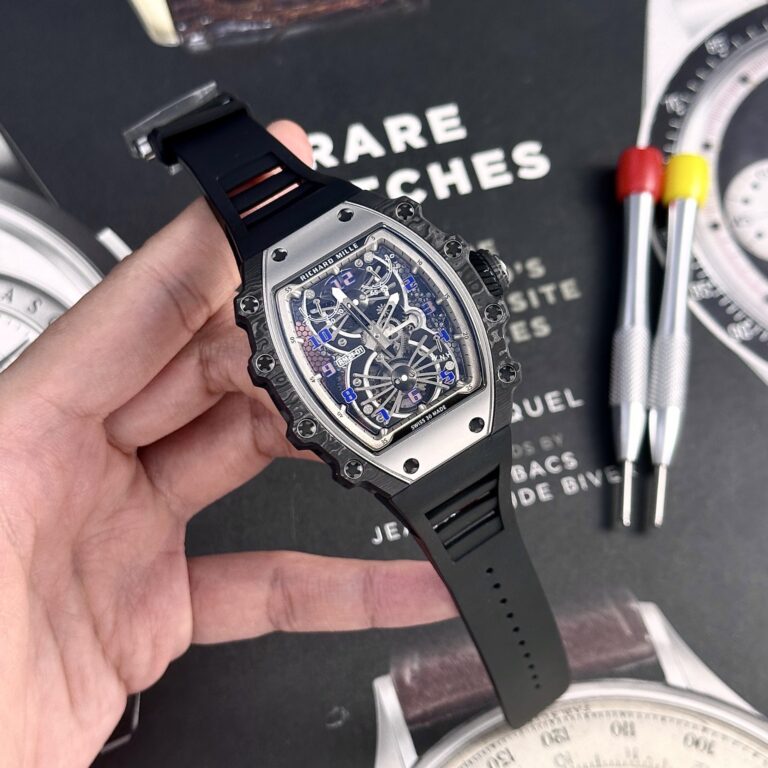
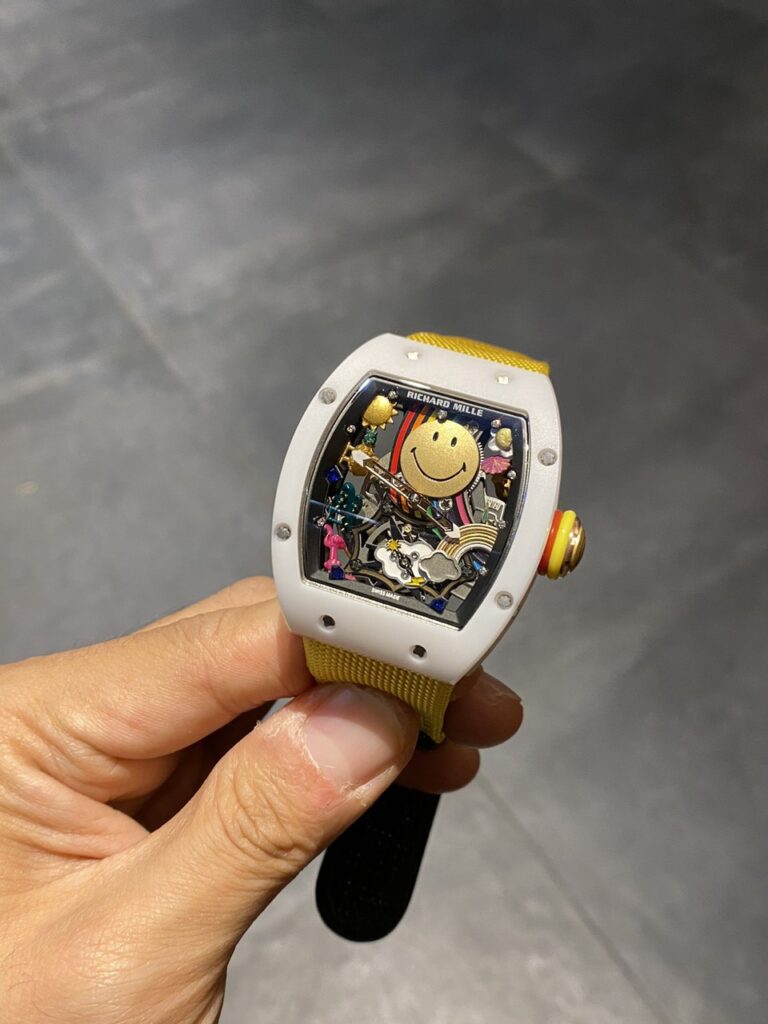
Richard Mille RM07-03 Candy Watch (OXF Best Edition) Colourful Dial on White Rubber Strap – MIYOTA 6T51 Super Clone
detail
detail
RM-RICHARD-35726
Call: +1 (800) 729-2661
sales@replicawatchesco.com
Richard Mille creates a weird situation for replica makers. With a more conventional watch, the movement sits behind a dial. You see hands, markers, bezel, maybe a date window. The inside stays mostly out of view.
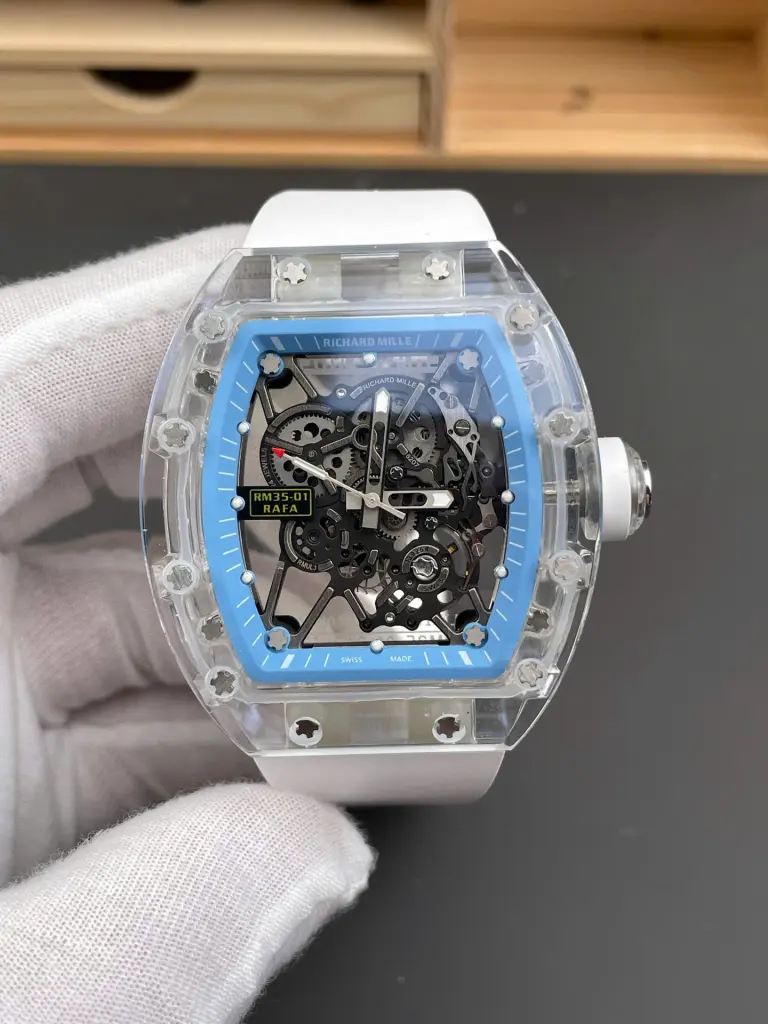
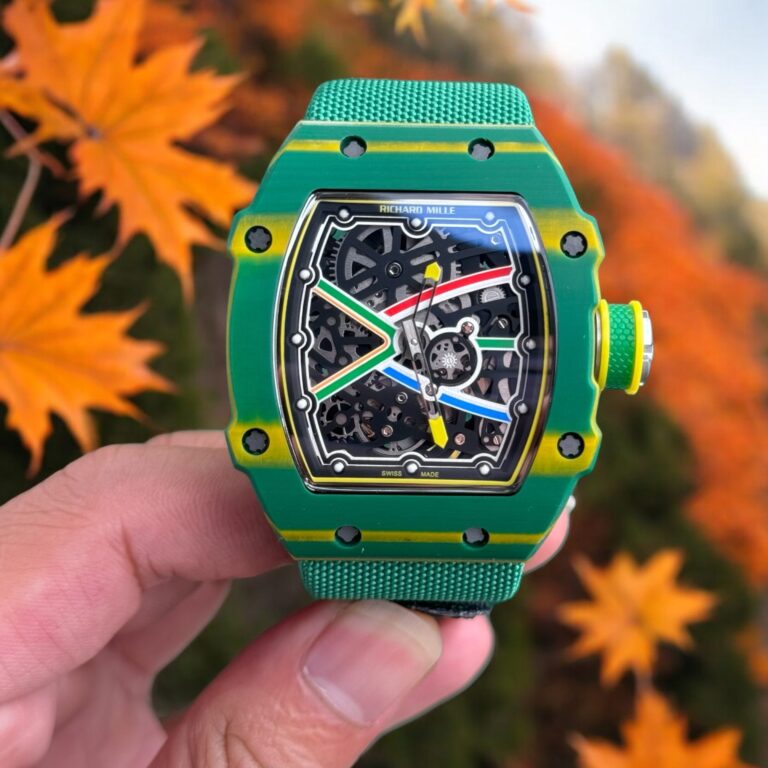
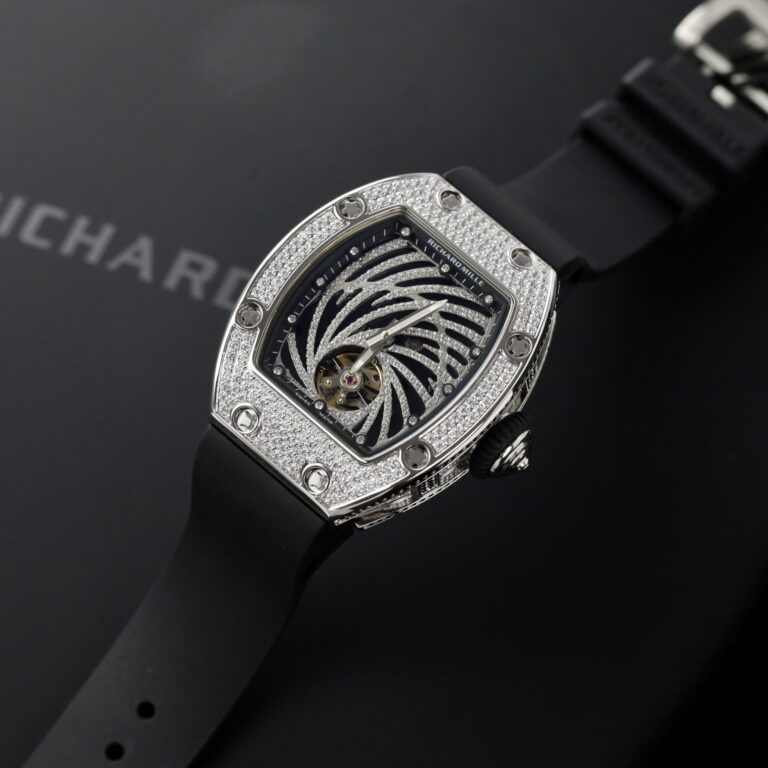
Richard Mille flips that. The mechanics show up on the front. Gears, bridges, screws, barrels, open sections, and subdials all compete for attention. Even if you don’t know much about movements, you can still stare at the watch and feel like something technical is happening.
That’s why a lot of replicas can look impressive quickly. It’s also why many of them fall apart once you stop judging the photo and start judging the layout.
There’s a real gap between “looks complicated” and “has a complicated design that actually fits.”
That gap is what this page is about.
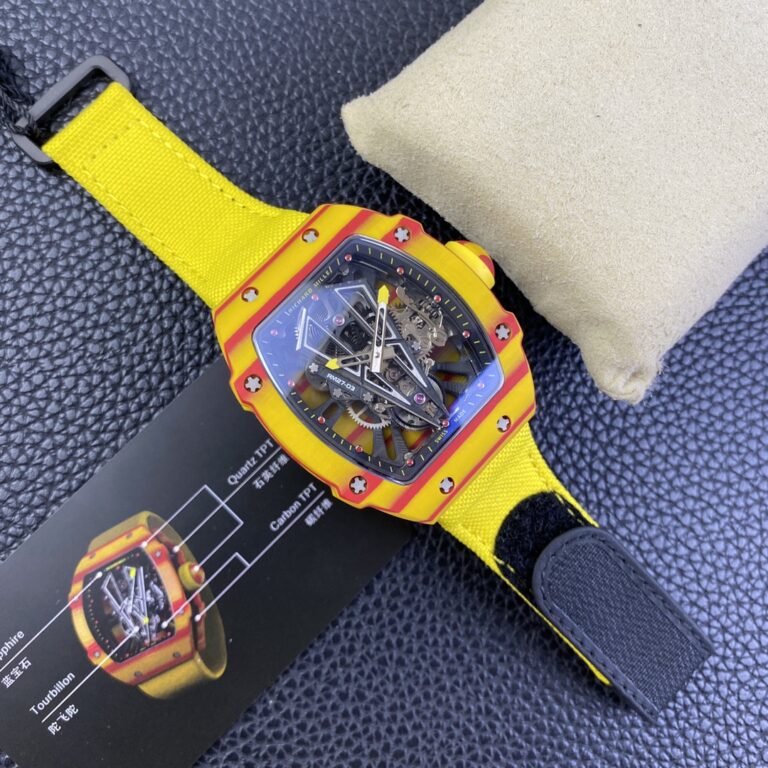
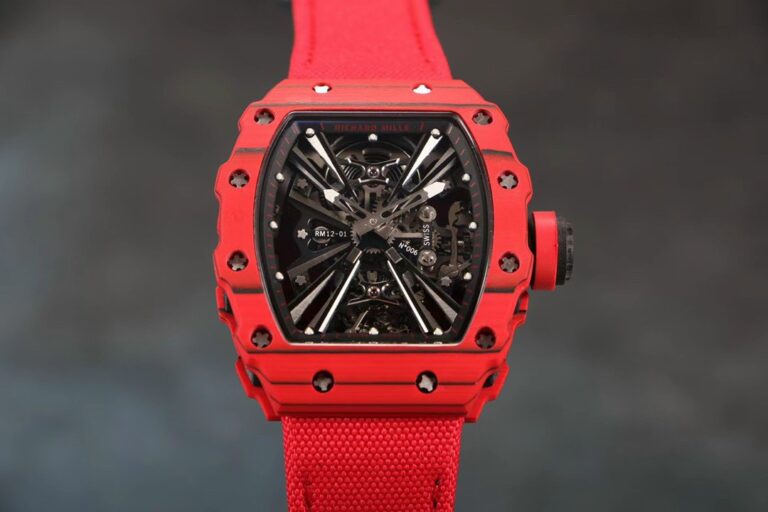
Calling many Richard Mille designs “skeleton dials” undersells the point. On a traditional watch, the dial is basically a cover. With open-worked Richard Mille models, the visible components behave like the dial itself.
Your eyes aren’t just finding hour markers. You’re reading layers. A bridge might cut across one area, a gear might sit behind another, and hands can float at different heights. Subdials and indicators occupy space that would normally be plain printing or applied markers.
So when you compare Richard Mille replica watches, counting how many gears or bridges are visible isn’t the win you think it is. Busy is easy to manufacture.
The better question is simple: are the visible parts in the right places, in the right relationship to each other?
A replica can be stuffed with mechanical-looking pieces and still be visually wrong because the architecture doesn’t match the reference.
Making the movement look busy is relatively easy. Getting the structure right is harder.
Product photos can be persuasive. A heavily skeletonized Richard Mille replica can look stunning in one big, high-resolution shot. Metal sits at different levels. Screws and polished edges throw reflections. Everything looks mechanically rich.
Then you line it up against the real reference. That’s when you notice it wasn’t the amount of detail that was right. It was the placement and shape.
Common tells show up fast once you compare:
Sometimes extra decorative pieces get added just to fill empty space that would otherwise reveal how different the movement really is.
None of this means the replica has to be ugly. It just means you’re buying a different construction approach than the listing implies.
Almost every open-worked Richard Mille replica looks mechanical. That’s a low bar. The real check starts when you ask what the watch claims to do.
Does what you can see correspond to the function it’s supposed to deliver?
That changes everything.
If the reference is a chronograph, don’t just verify the number of subdials. Activate it. See what changes when you start, stop, reset, and operate the crown positions.
If there’s an indicator, don’t assume it’s active because it sits in the right general area. Verify that it responds to real operation.
With date displays or function-related layouts, also check whether the arrangement and behavior line up with the specific reference model. A dial layout can look “close enough” while the mechanics underneath tell a different story.
This is especially helpful for Richard Mille replica watches because the visible complexity can hide a lot. You can stare at the dial for a while and never ask the one question that matters: what does it actually do?
Most listings rely on still images. Photos are easy to shoot and easy to browse. They’re also limited.
A picture can confirm a subdial exists. It can’t confirm whether the hand inside behaves correctly. A photo can show pushers. It can’t show how the mechanism responds when you use them.
That’s why a short, functional video can tell you more about a Richard Mille replica than another batch of crisp, bright close-ups.
You don’t need a dramatic wrist roll. You need operation:
Watch what changes. The watch stops being a static display and starts behaving like a machine.
Chronograph models are obvious test cases. You push a button. Something should happen. That simplicity is useful, because detailed replicas can bury buyers in visual noise.
People end up inspecting the subdial design instead of testing whether the subdial mechanism actually acts like the reference.
A Richard Mille replica watch can show the right number of displays and still behave differently. Reset behavior can differ. The hands can be assigned to the wrong job. A display that looks functional might be fixed in place.
Even when everything moves, the relationship between the displays can be wrong. That doesn’t automatically make the watch worthless. It does mean you’re looking at two different claims: “chronograph-like visually” versus “mechanically similar in operation.”
Which one are you buying? That answer matters more as the visible movement gets more complex.
Decorating the movement isn’t automatically a problem. Some replicas get extremely convincing results.
Here’s how it often happens: a base movement doesn’t match the reference closely enough from the front. Then the maker adds decorative bridges, plates, or other visible components to make the watch’s face look closer to the original.
From a normal viewing distance, it can look right. The key is understanding which part is real architecture and which part is styling.
A bridge that looks structural might actually be ornamental. A visible wheel through an opening might not perform the same role as the wheel in the reference. Even a screw can exist mainly because the real watch has one there.
That’s why the phrase Richard Mille replica covers a wide range of approaches. Some focus on copying the mechanical layout. Others focus on copying what the front looks like.
Those goals can overlap, but they don’t always match.
So if you care mostly about appearance, decorative architecture can satisfy you. If you care about how the reference works, you’ll judge the replica differently.
There’s a reflex people bring to skeleton watches: more must mean better. More depth. More gears. More screws. More exposed metal.
Sometimes that impulse backfires. Filling open areas with mechanical bits that don’t belong can make the replica look busier than the reference ever intended.
If a bridge shape is wrong, adding extra decoration around it doesn’t fix the underlying geometry. If a wheel sits in the wrong position, polishing it just makes the incorrect placement more obvious.
Instead of judging what the movement looks like in isolation, compare the pattern. Where are the dense sections? Where are the open sections? What pulls your eye first? Where do the hands travel? Which visible components look like they connect?
That kind of comparison tells you whether the movement architecture belongs to the reference, not whether it’s merely busy.
It sounds backwards, but complexity can work against the watch.
Imagine one Richard Mille replica that tries to imitate every visible complication and ends up doing several of them poorly. Another version simplifies the movement but gets the main visual layout and the functions you’ll actually use mostly right.
Which is better? There’s no single answer, but I wouldn’t automatically pick the one with the longer specification list.
Every extra complication is another place where something can behave incorrectly. It adds another display that needs alignment. Another hand that needs correct motion. Another mechanism that might need service later. It also adds more opportunities for a small cosmetic mismatch to be noticed.
Complexity does come with a cost. With Richard Mille, that cost shows up twice—first in the build, then in what you’re willing to accept as “close enough.” The trick is separating complexity that supports the design from complexity added mainly to impress in listings.
Another common mistake is assuming a more complicated-looking Richard Mille replica must be “higher level.” The reference decides what the watch is supposed to be.
One design might be visually restrained by choice. Another might rely on open spacing. A different reference can pack more information into the same general case shape.
So the number of visible parts doesn’t tell you which Richard Mille replica watches are better made.
The only meaningful comparison is against the architecture of the specific reference. Does the replica contain the right kind of visual complexity for that design? That’s an accuracy question.
Asking whether the replica has “enough” complexity is a spectacle question. Richard Mille designs already bring plenty of spectacle. The replica doesn’t need to invent more.
Most people focus on the front because it’s what you see on the wrist. Still, if both sides show the movement, the caseback can reveal a different story.
Sometimes the front gets most of the cosmetic attention because that’s where photos get taken. Flip it over and the approach becomes clearer.
You might see more of the base movement. Finishing choices can shift. The layout may look far less similar to the reference than the dial side suggested.
That doesn’t automatically mean the replica is worthless. It tells you how the maker built it.
If the front is tuned for a specific mechanical appearance while the back contradicts it, that points to prioritized visual replication over mechanical similarity.
That’s more informative than a seller repeating “1:1” over and over.
If you’re going to compare two replicas, don’t rely on more beauty photography. Ask for evidence of operation.
Show the front while the watch is running. Show the complication being used. Show the crown being operated. If it’s a chronograph, show the pushers starting, stopping, and resetting the mechanism. Then show the movement from the back. Finally, show the watch static again.
Now you’re comparing two things at once: what the watch looks like and what the visible mechanics actually do.
Those two things don’t always line up. That mismatch is exactly where the real value judgment happens.
Richard Mille replicas attract people who like mechanical drama. The watches are loud in appearance. They’re styled to make the movement impossible to ignore.
But a busy-looking watch isn’t automatically the most convincing one.
I’d rather see a Richard Mille replica with a coherent layout and functions you can understand clearly than one stuffed with mechanical-looking parts that don’t match the reference’s logic.
That doesn’t mean every visible piece has to perform the exact same job as in the original. Replica builds involve compromises.
The useful part is knowing where those compromises land.
Once you spot them, comparisons get easier. You stop asking whether the movement looks complicated enough. You start asking whether the complication makes sense, whether the displays work, whether the visible components are positioned logically, whether decorative architecture is being used with intent, and whether the watch behaves the way its appearance suggests it should.
With a closed-dial watch, you can leave a lot of that hidden. With a Richard Mille replica watch, it sits in front of you.
That’s why, with Richard Mille more than almost any other replica category, “mechanical-looking” and “mechanically convincing” aren’t the same claim.



| Movement | |
| Case Material | |
| Diameter | |
| Thickness | |
| Bezel | |
| Crystal | |
| Power Reserve | |
| Waterproof |
Browse our collection of 1:1 CNC-milled clone timepieces and select a watch for precision regulation.
Explore The Collection →