Day-Date
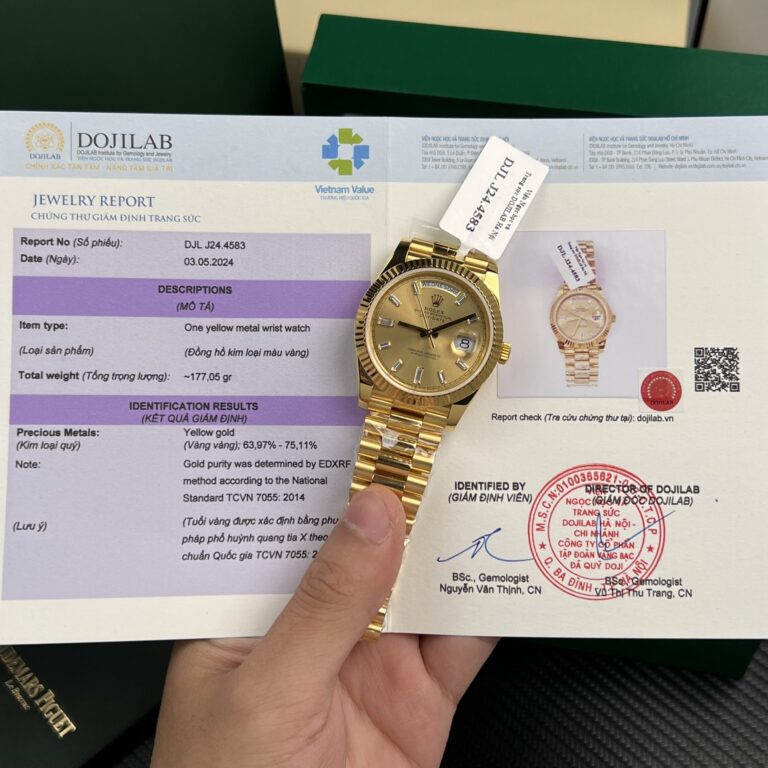
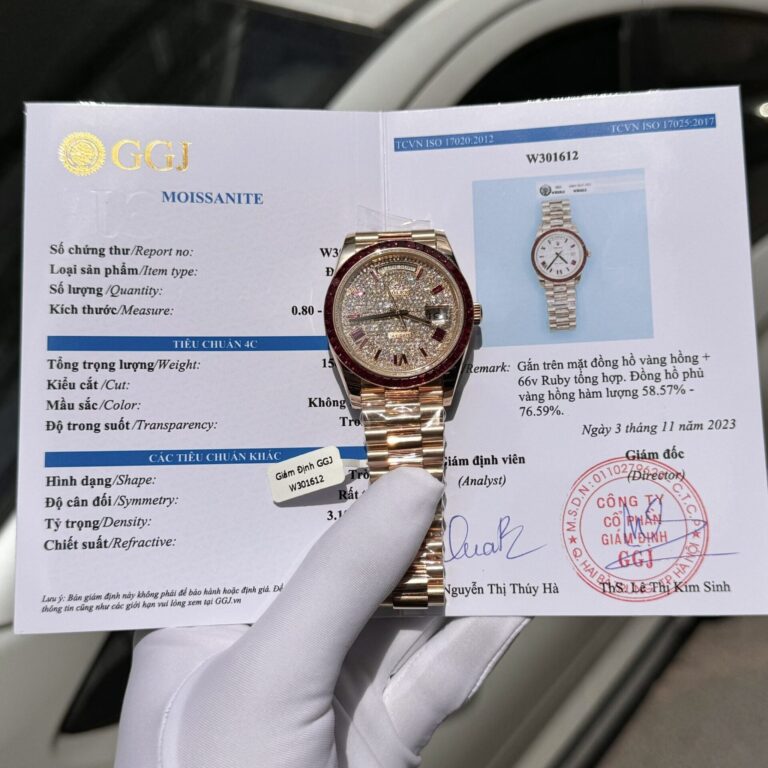
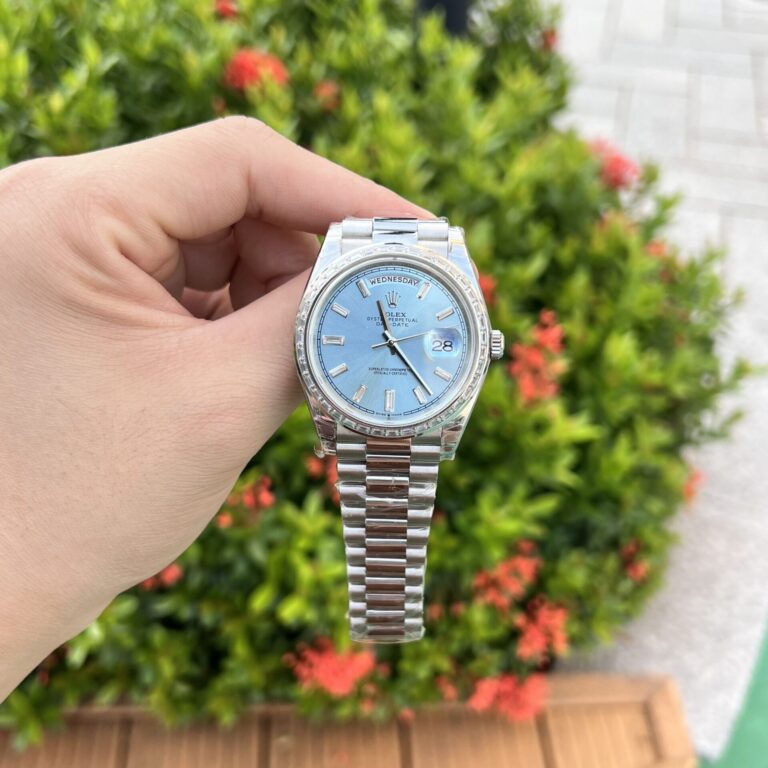
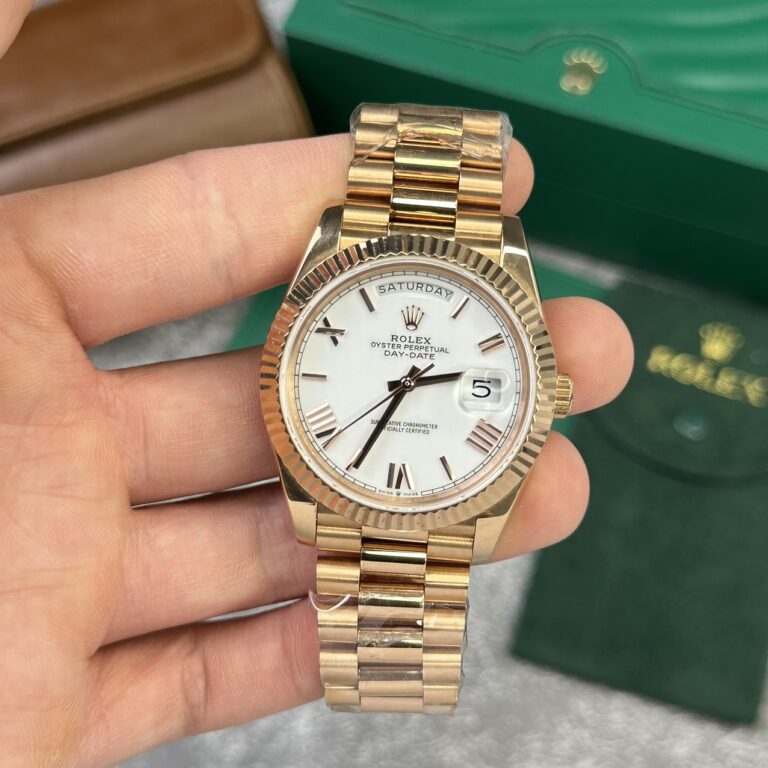
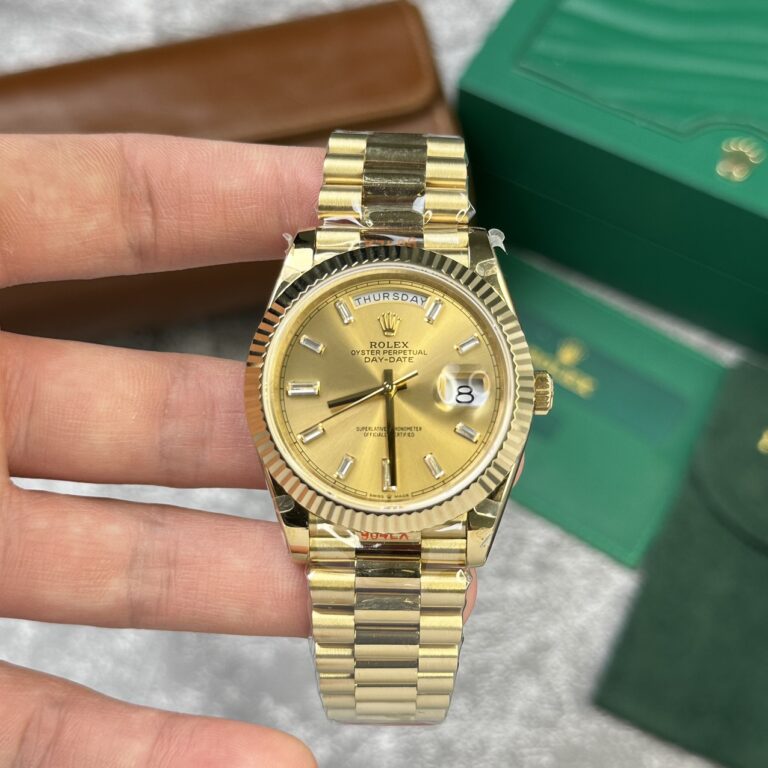
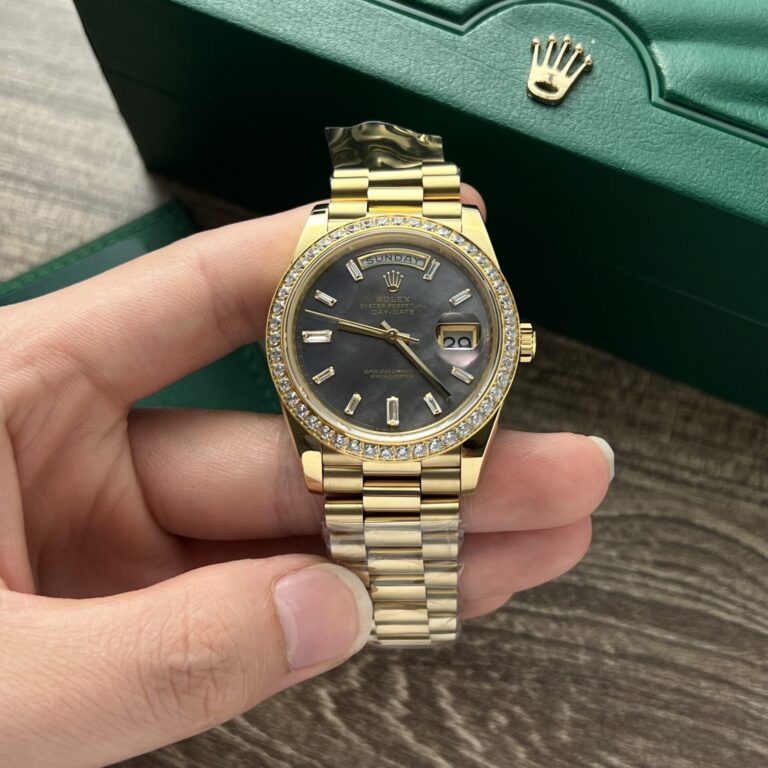
Rolex Day-Date Super Clone 40mm Gold Wrapped (GM Factory) Champagne Dial – Automatic Caliber 3155
40 mm
Gold Wrapped
RLX-ROLEXSU-4984
Call: +1 (800) 729-2661
sales@replicawatchesco.com
The Day-Date announces itself through more than the dial. Pick one up and the weight registers immediately, especially on versions based on gold and platinum references.
That point matters with Rolex Day-Date replica watches. A watch can photograph well and still feel obviously light once the case and President bracelet are in your hand. The color and silhouette may be close, but the missing mass gives the whole piece a different character.
For ReplicaWatchesCo.com, the Day-Date category makes more sense as a complete build: case size, dial, bracelet, weight, calendar alignment, and movement. Factory names come later. They shouldn’t make the decision for you.
A Submariner can be judged quickly from the bezel, dial, and case shape. The Day-Date takes longer because the case is only one part of what you see.
The fluted bezel, President-style bracelet, day display at 12 o’clock, date at 3 o’clock, dial color, and overall weight all contribute to the result. Get one of those elements noticeably wrong and the problem spreads across the watch.
A replica with a convincing dial can still feel unfinished if the bracelet is too light or the day display sits badly in its window. The Day-Date has a lot of visible and functional detail competing for attention. None of it gets to hide for long.
The traditional Day-Date size is 36mm. That smaller case puts more emphasis on the bezel and bracelet, with less open dial area between them. Even a bright dial tends to look compact.
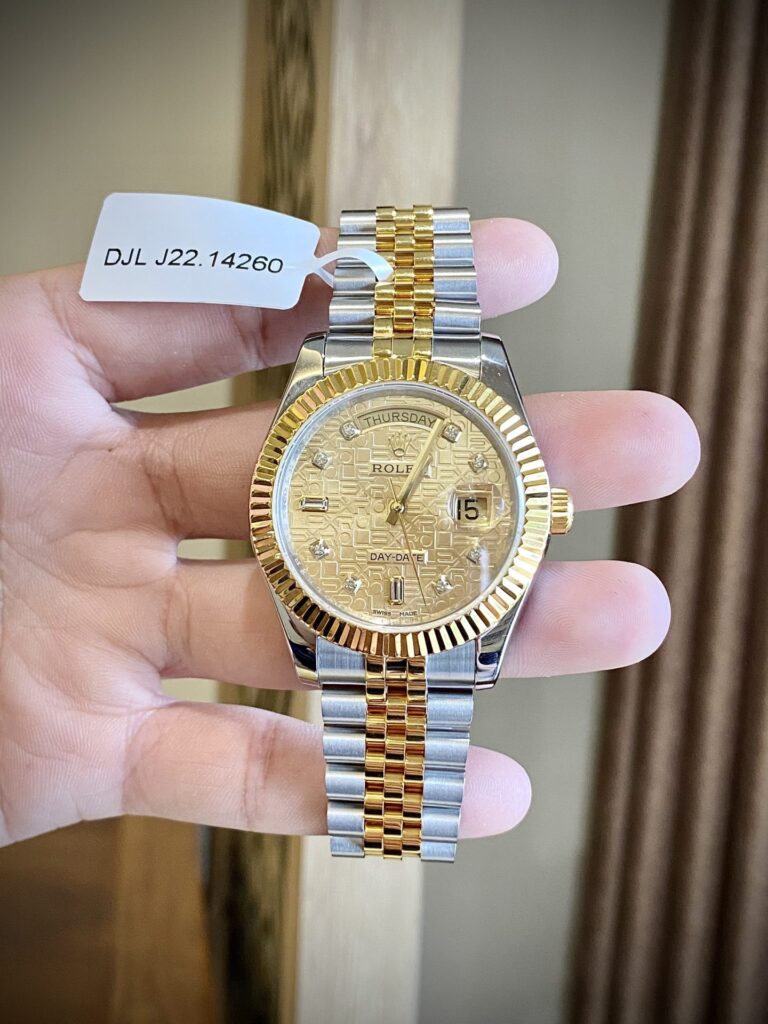
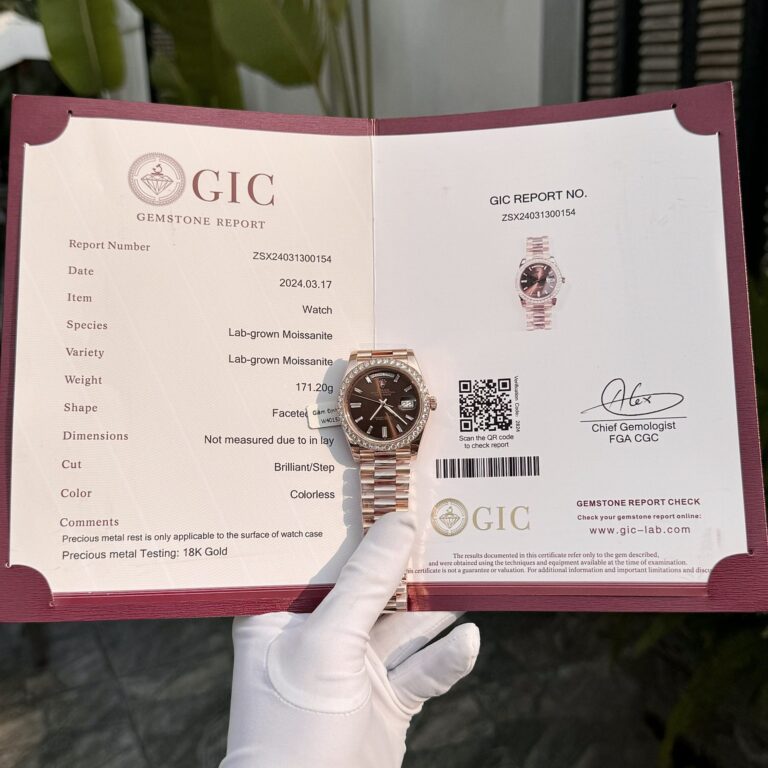
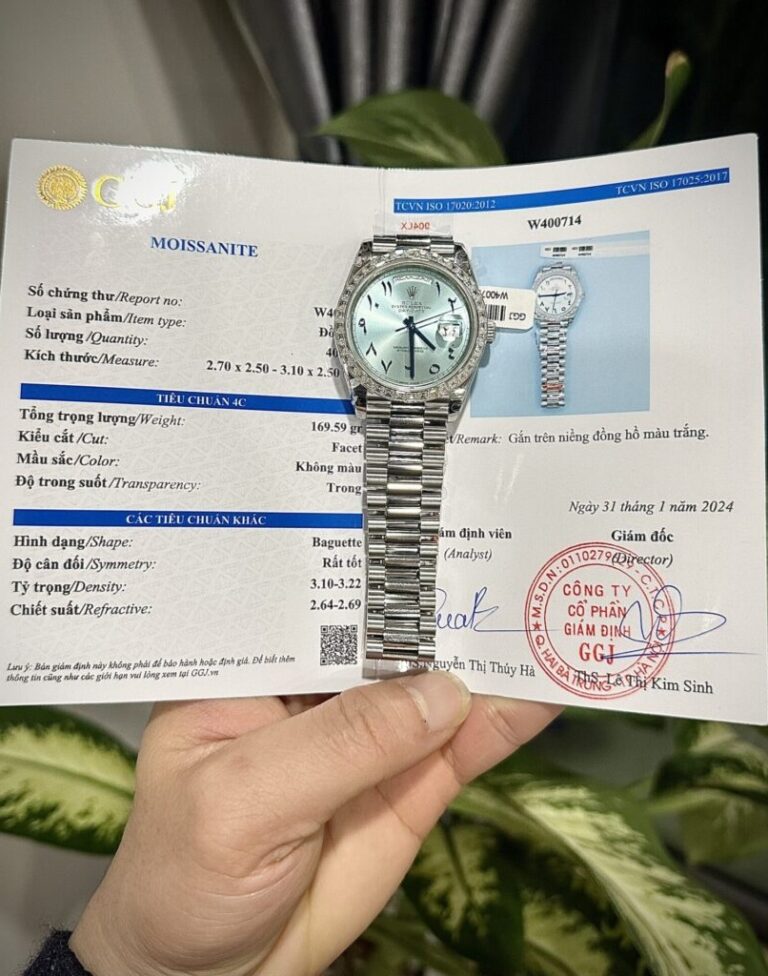
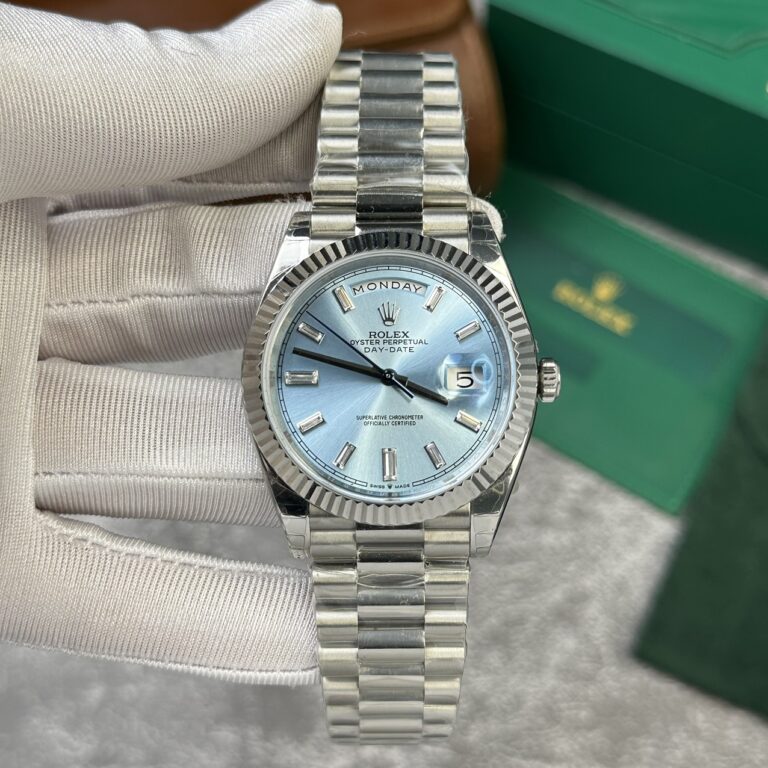
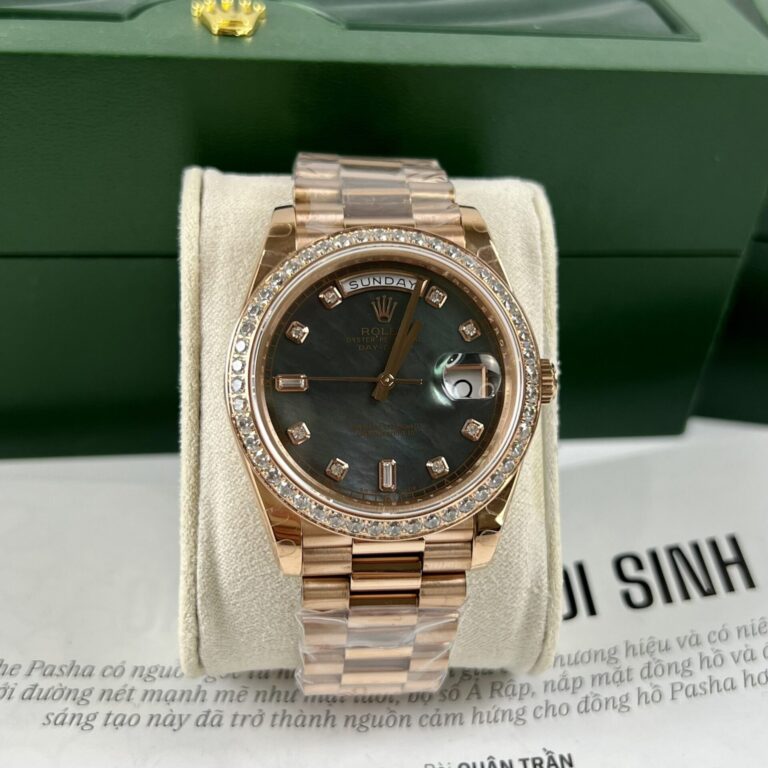
The 40mm versions have more room to work with. Wider spacing between the markers gives colors such as olive green, chocolate, black, champagne, and ice blue more presence. Roman numerals and diamond-style markers also become easier to notice on the larger dial.
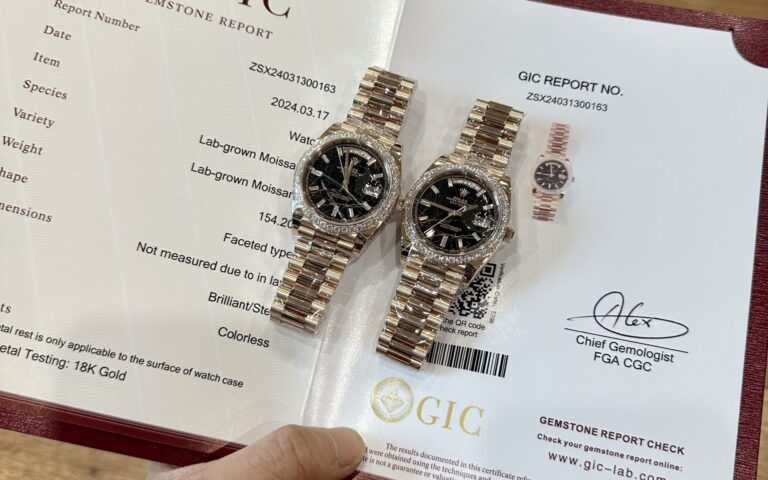
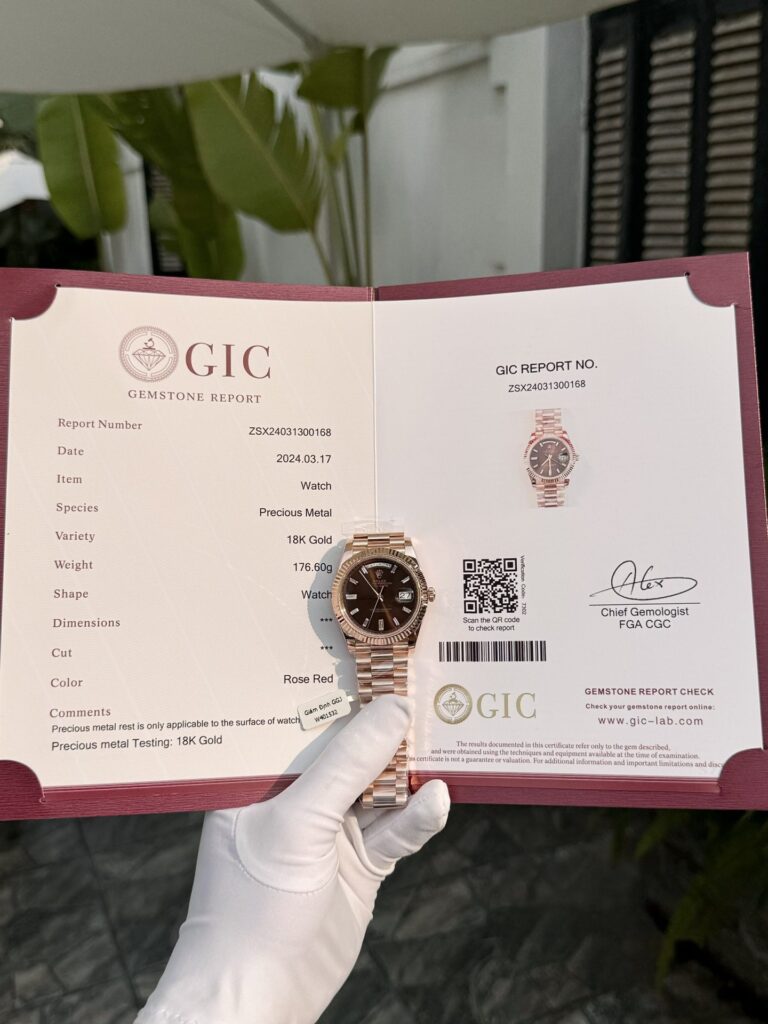
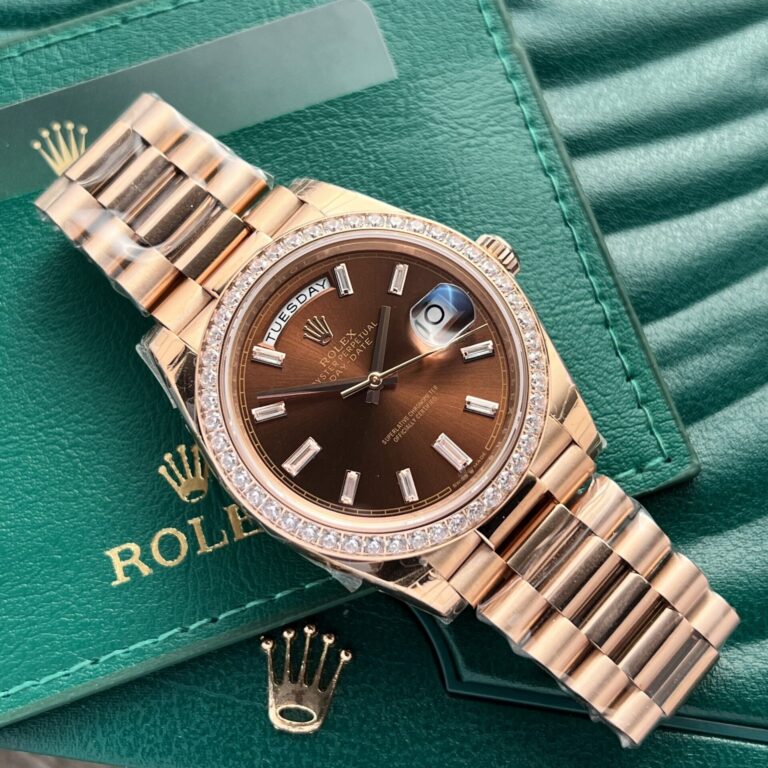
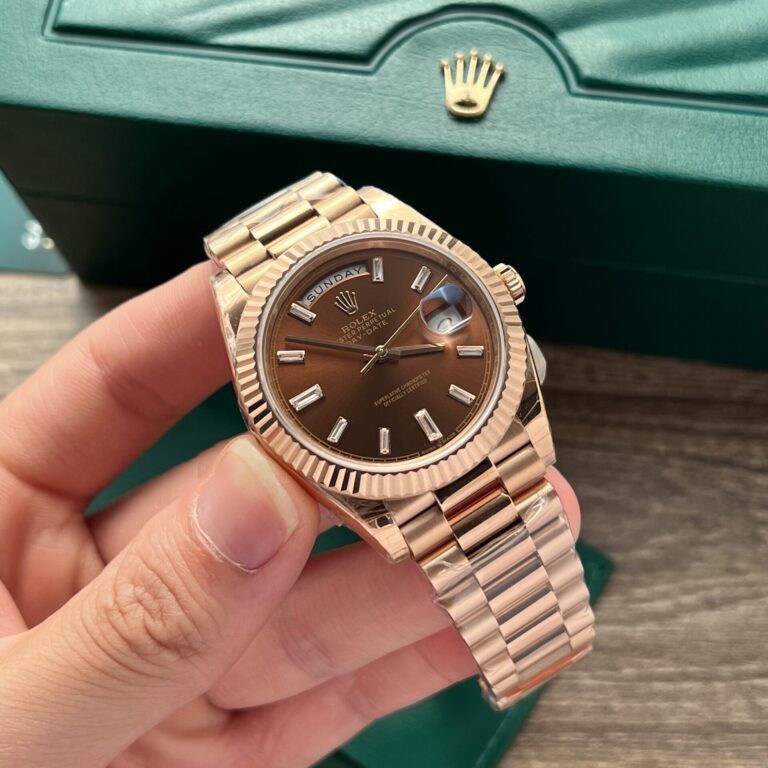
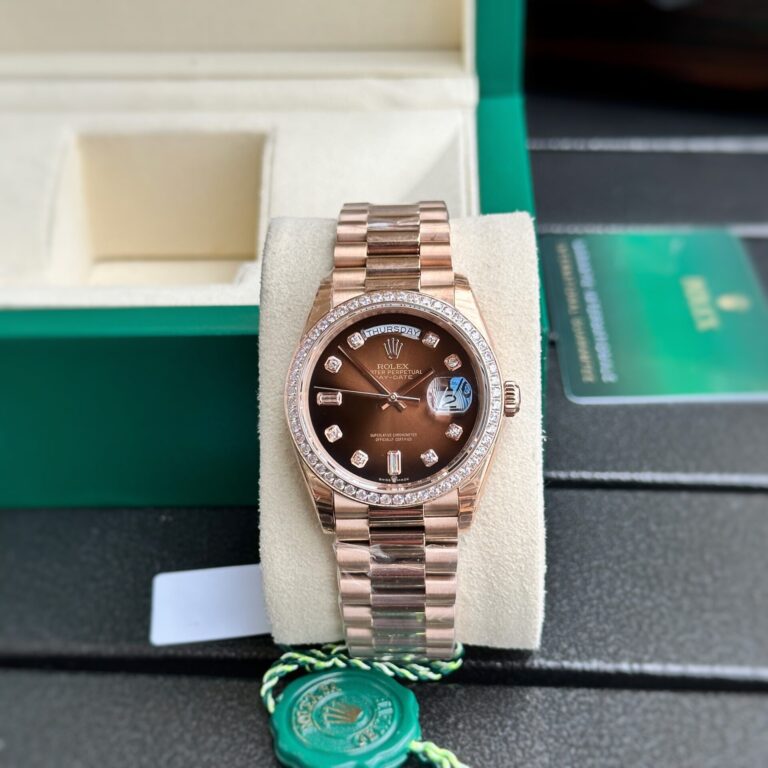
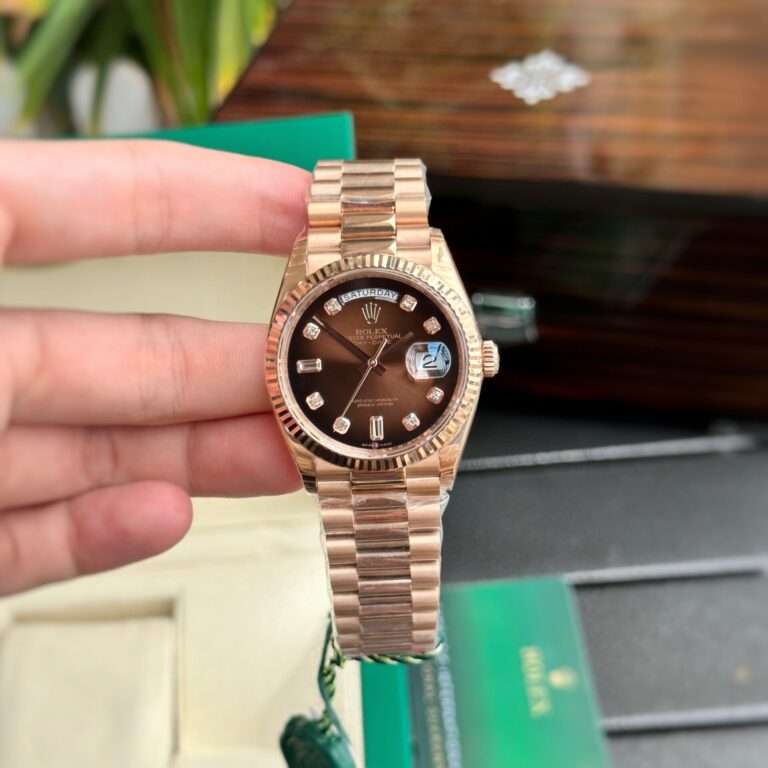
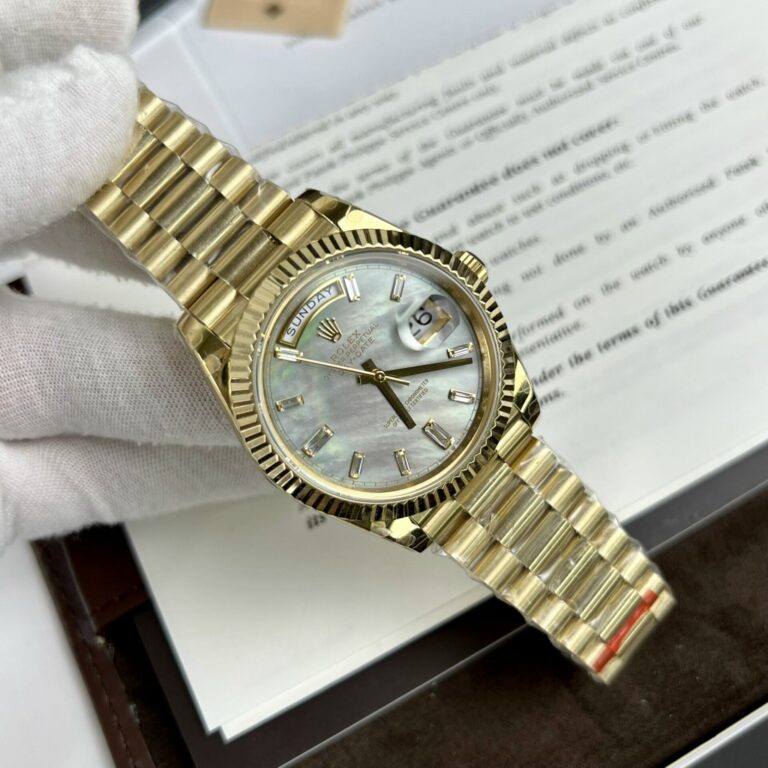
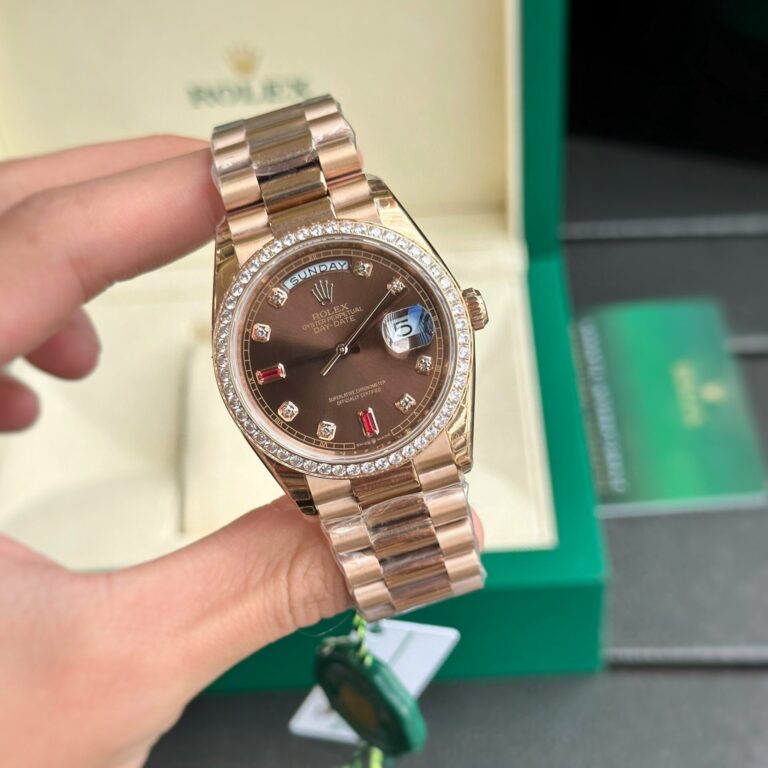
The difference isn’t only about wrist size. A 36mm yellow-gold-tone Day-Date with a champagne dial stays close to the older President look. A 40mm rose-gold-tone version with a chocolate dial reads as a newer, more noticeable watch. Those combinations deserve separate comparisons rather than being grouped together because they share the Day-Date name.
Many genuine Day-Date references use precious metal, so they carry considerably more weight than a comparable steel watch. Standard replica construction can reproduce the color and shape while missing that physical presence altogether.
Weighted builds get attention for that reason. Some higher-end factory versions add internal mass or tungsten-based components to bring the watch closer to the heavier feel associated with a precious-metal reference. The extra material only helps if it has been distributed sensibly.
Total grams are one piece of the picture. A heavy watch head paired with an unusually light bracelet feels unbalanced. A dense bracelet attached to a lighter case creates its own awkwardness. You notice the mismatch as the watch shifts around the wrist.
Look at the weight of the complete watch, not just a number in the product title. A 180-gram watch isn’t automatically better than a 170-gram one. How that mass sits matters more than a small difference on paper.
The bracelet carries much of the Day-Date’s identity. Its rounded three-link layout gives the watch a different appearance from an Oyster or Jubilee bracelet, and gold-tone models put a lot of visible metal around the wrist.
Start with the links from the side rather than viewing them only straight on. Check how the first links meet the case and whether the bracelet hangs naturally instead of feeling stiff. The way it drops from the lugs tells you a lot about the build.
The clasp deserves the same attention. A loose or poorly aligned clasp is hard to overlook because the bracelet occupies so much of the watch. On a weighted model, added mass shouldn’t turn the bracelet into something top-heavy or awkward once worn.
Photos make gold-color comparisons unreliable. Strong studio lighting can make a yellow-gold-tone case look more saturated than it does under ordinary indoor light. Rose gold can shift from warm copper to noticeably pink depending on the photograph.
Chocolate dials move around visually too. Side-by-side images help, but look at the whole watch rather than judging the dial or case in isolation. The case, bezel, bracelet, hands, and markers should look as though they belong together, not like slightly different shades assembled around one dial.
Two-tone and rose-gold-tone models show these inconsistencies quickly. A small color mismatch on a watch with a lot of exposed metal becomes visible from across a room.
The Datejust asks the date window to behave. The Day-Date adds a large calendar opening at 12 o’clock, creating another prominent place for alignment to go wrong.
The weekday should sit naturally in the center of its opening. It shouldn’t crowd one edge or sit noticeably high or low. If photos or video show several days, inspect more than one. A single centered word doesn’t establish that the entire day wheel is positioned equally well.
The date at 3 o’clock needs the same inspection. Look at more than one number, then check the centering, font consistency, and relationship between the date window and Cyclops magnifier. The calendar takes up enough of the dial that poor alignment stays visible.
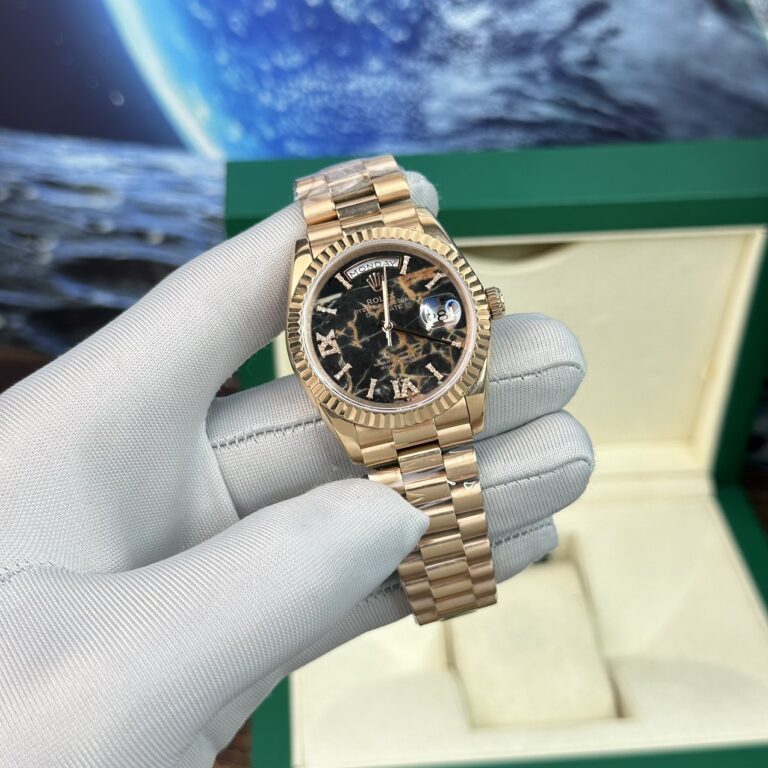
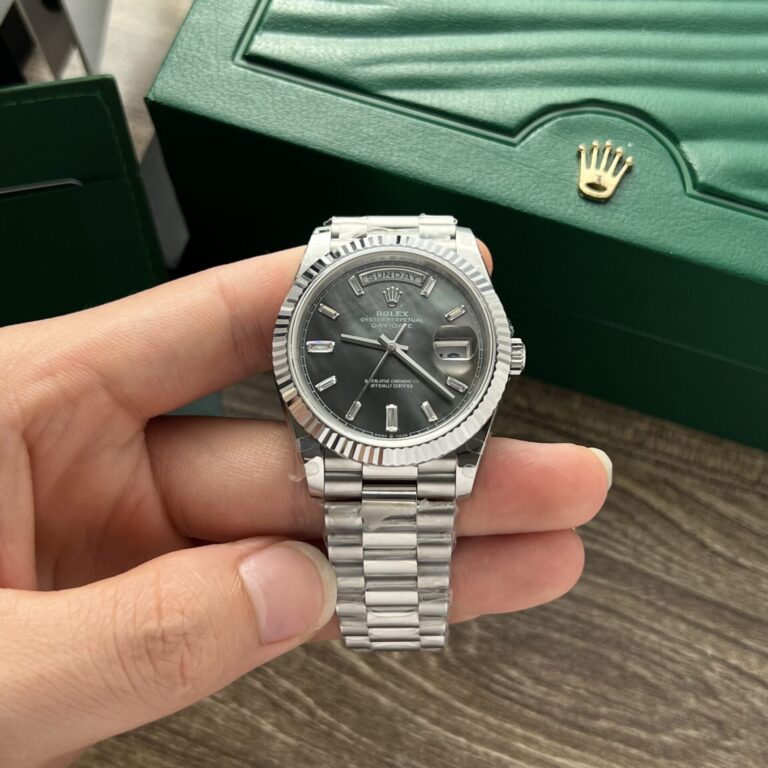
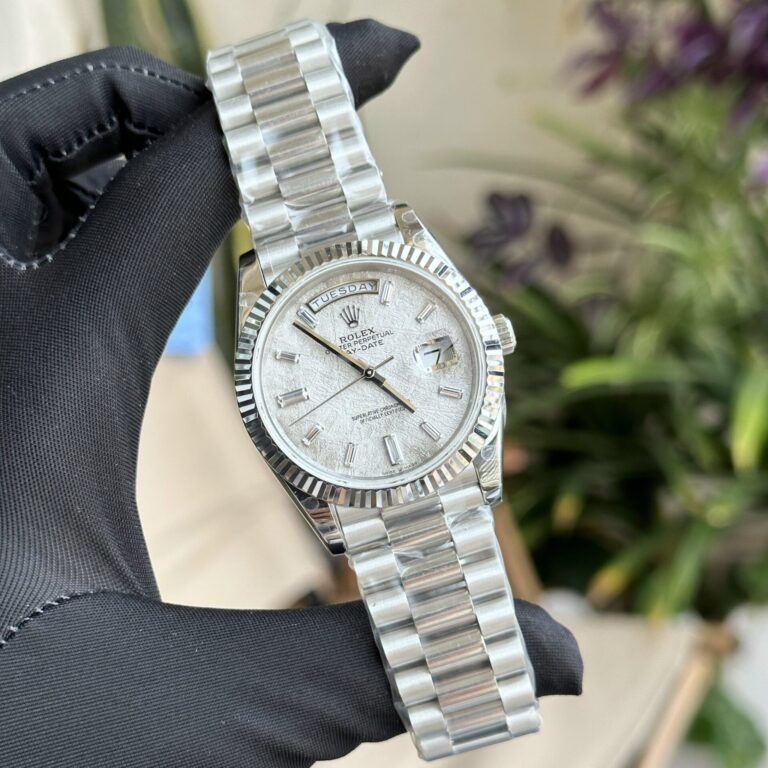
Day-Date dials become complicated quickly. Champagne and black are fairly straightforward, while olive green, chocolate, ice blue, meteorite-style, ombré, Roman-numeral, and stone-style versions introduce more variables.
A busy dial can hide a small printing flaw. A clean stick-marker dial can’t. Roman numerals need even spacing, and diamond-style markers need consistent placement. Sunburst finishes should shift with the light instead of looking flat in every image.
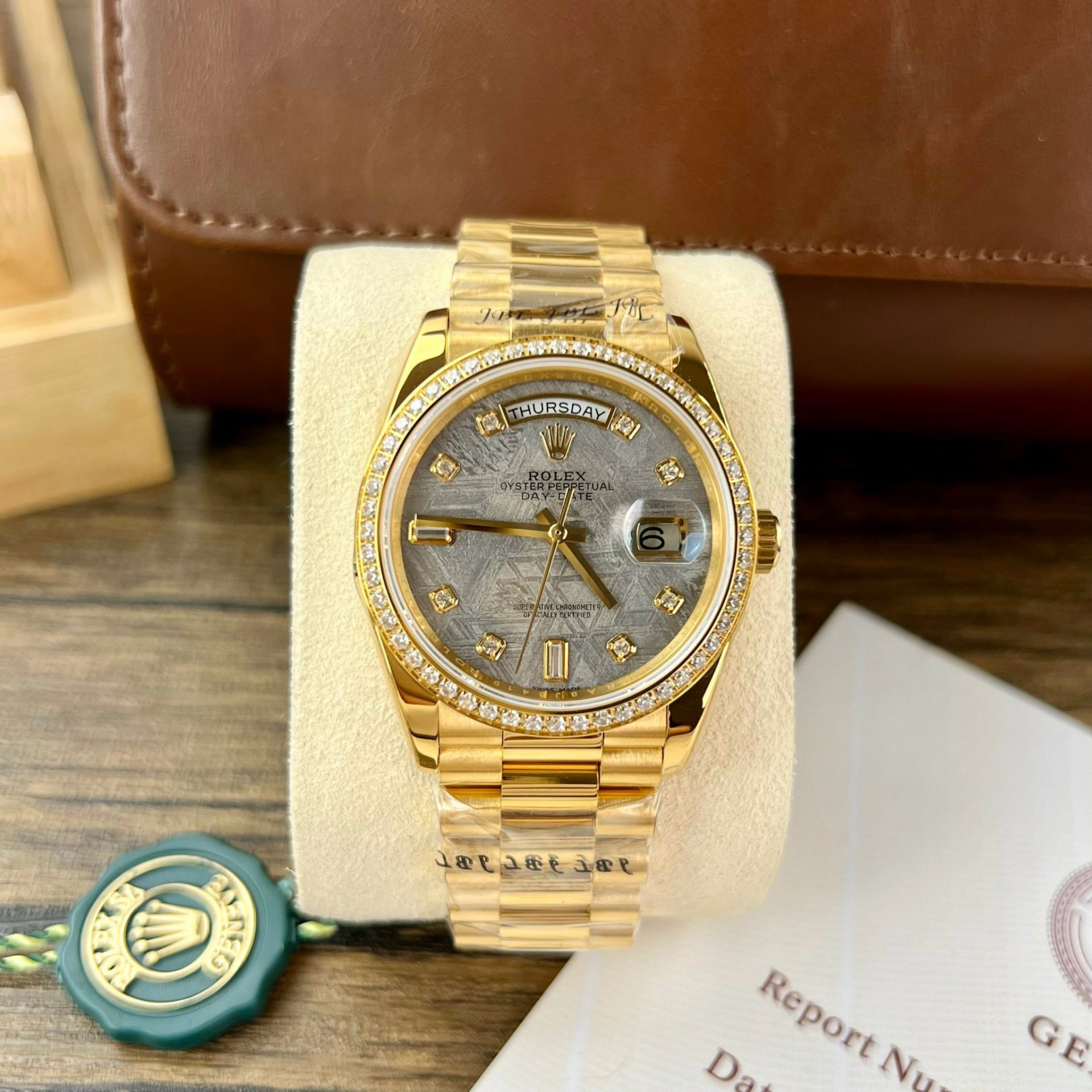
Meteorite-style dials deserve a separate judgment. Pattern matters, but chasing one exact pattern is less useful because genuine meteorite dials don’t look identical to one another. The overall texture should look believable rather than printed as a perfectly repeated design.
Judge the dial as part of the complete color combination. Chocolate against rose-gold tone has a different effect from olive green against yellow gold, even if the case size and layout are otherwise similar.
The fluted bezel does a surprising amount of work on a Day-Date. The case, bracelet, and dial can all use related colors, so the bezel creates one of the stronger breaks between those surfaces.
Direct light makes it much brighter; softer light settles it down. Poorly shaped fluting changes that behavior. Grooves that are too soft, too shallow, or inconsistent can make the bezel look dull even when the rest of the watch is convincing.
View it from more than one angle. Straight-on product photographs leave out part of the story, particularly around the depth and regularity of the grooves.
Day-Date replicas may be sold with different automatic movements depending on the factory and batch. Some are marketed around 3255-style clone movements because current 40mm Day-Date references use that general movement architecture. Other builds use simpler automatic movements configured to operate the day and date.
The number by itself gives you a starting point, not a full assessment. Check crown positions and time setting. Check the date and weekday separately. Then watch how both calendar displays change around midnight.
The Day-Date has more going on mechanically than a basic three-hand watch, so both calendar functions deserve attention. A product title that says “3255” should start the movement conversation, not finish it.
Factory comparisons become useful after the exact Day-Date has been narrowed down. Consider a 40mm rose-gold-tone case with a chocolate dial, fluted bezel, President bracelet, and weighted build. Now the factory information has a job to do.
One version may put more effort into weight. Another may use a different movement. A third may offer the dial color you prefer while pairing it with a lighter bracelet. I wouldn’t reduce the category to “which factory is best?” Factory choice should follow the reference and configuration.
Different factories can approach weight, plating, movements, bracelets, and dials in very different ways. A factory that does well with one Day-Date setup may not be the strongest choice for another.
Start with the watch at normal viewing size. Does the combination look right before you begin hunting for tiny details?
Then move closer. Check the weekday and date. Look at the fluted bezel, dial markers, and hands. Inspect the way the bracelet meets the case. Those areas tell you more than a long specification list.
If weight appears in the listing, look for the complete watch weight rather than relying on phrases such as “heavy version.” Movement functions deserve their own check. With gold-tone models, view the watch under more than one kind of lighting; strong warm light can make the same product look quite different from normal indoor conditions.
The easiest way to shop the Day-Date is to narrow the watch before comparing factory versions. Start with the case size, then work through the appearance and construction:
That order keeps the comparison focused. A 36mm champagne-dial Day-Date and a weighted 40mm chocolate-dial model aren’t substitutes simply because both carry the same name.
ReplicaWatchesCo.com carries Rolex Day-Date replica watches across different case sizes, dial combinations, weighted builds, movement versions, and factory options. The useful comparison isn’t just the factory name in the listing. Look at how the entire Day-Date has been put together.
| Movement | |
| Case Material | |
| Diameter | |
| Thickness | |
| Bezel | |
| Crystal | |
| Power Reserve | |
| Waterproof |
Browse our collection of 1:1 CNC-milled clone timepieces and select a watch for precision regulation.
Explore The Collection →