GMT-Master II
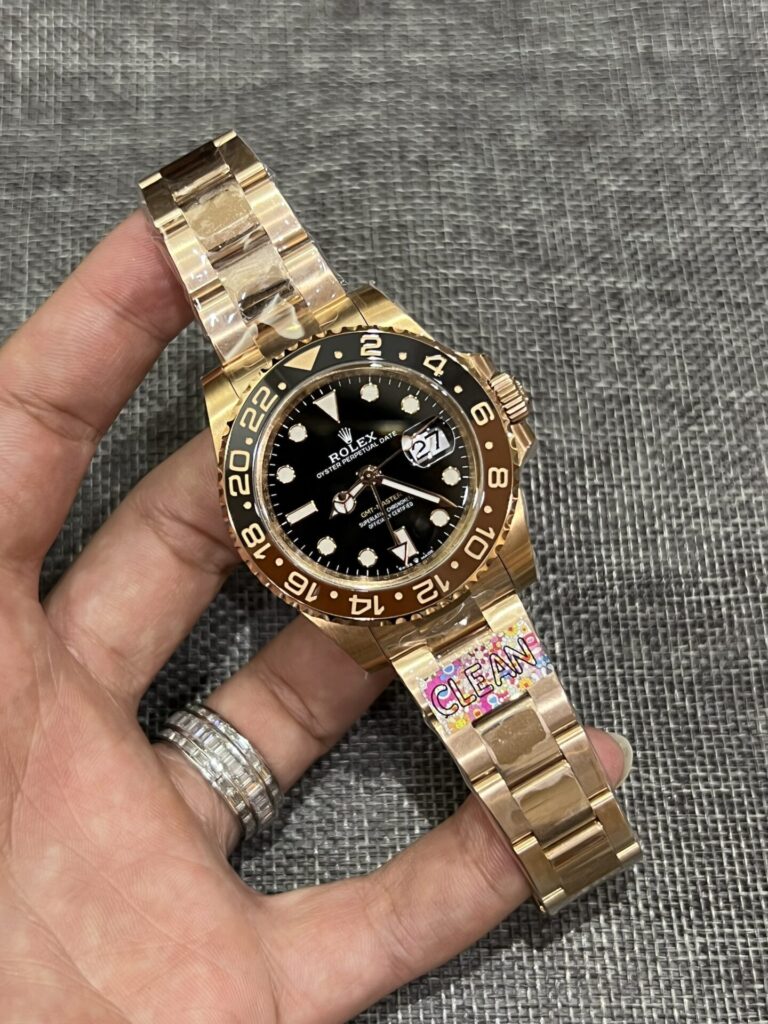
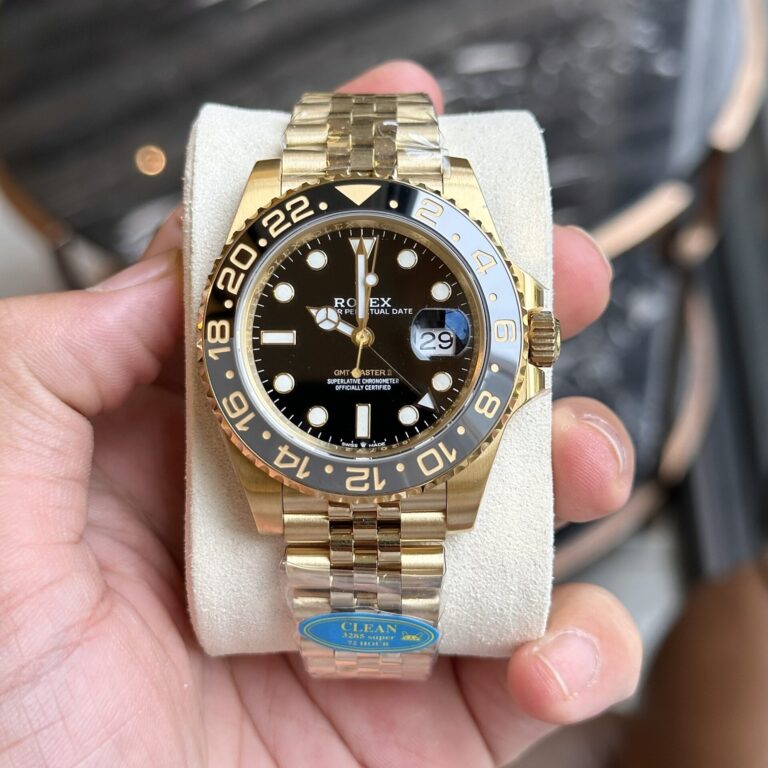
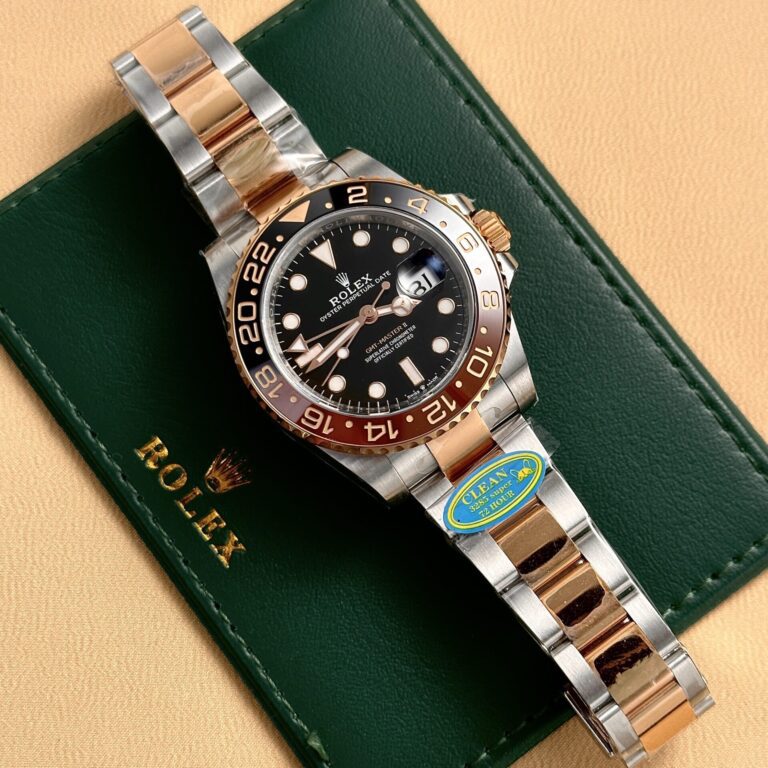
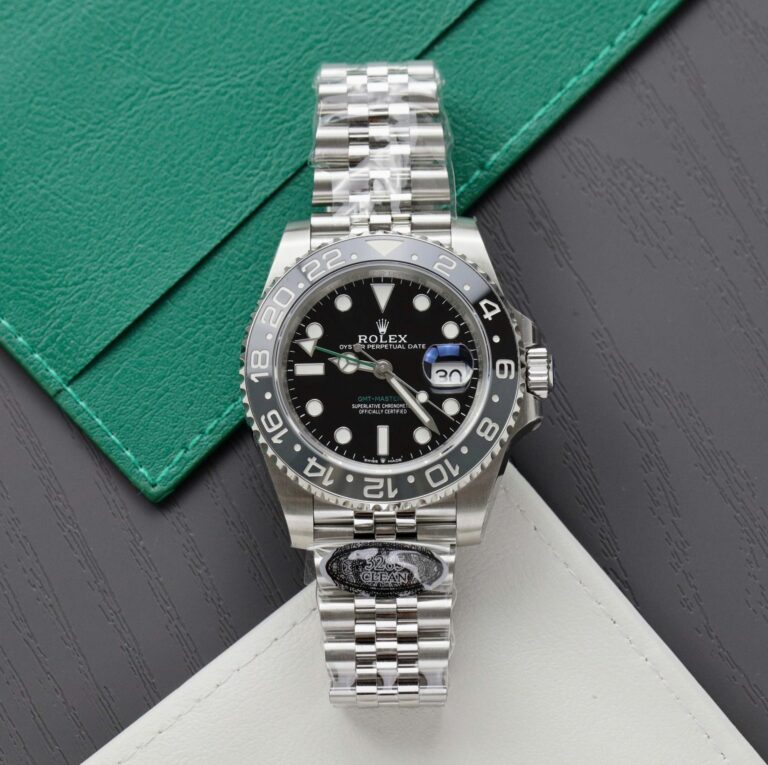
Rolex GMT-Master II 126715CHNR 40mm SS (Clean Factory Super Clone) Black Dial with Root Beer Bezel – Calibre 3285 Automatic
40 mm
Stainless Steel
RLX-126715CHNR-3704
Call: +1 (800) 729-2661
sales@replicawatchesco.com
The GMT-Master II is easy to shop badly. Most people start at the bezel: Pepsi, Batman, Batgirl, Sprite, black-and-gray. Pick a color, scan a few factory names, and the decision can seem finished before the useful questions even come up.
With Rolex GMT-Master II replica watches, the bezel is the obvious part, not the whole story. The local-hour hand needs to operate correctly. The date has to follow that hand through midnight. The GMT hand should track a second time zone as intended. Then come the less glamorous details: crystal behavior, hand stack, bracelet fit, case proportions, bezel height, and the specific movement inside.
Start with the exact GMT reference and the way you expect the watch to function. Factory names are useful later, once there is a real configuration to compare.
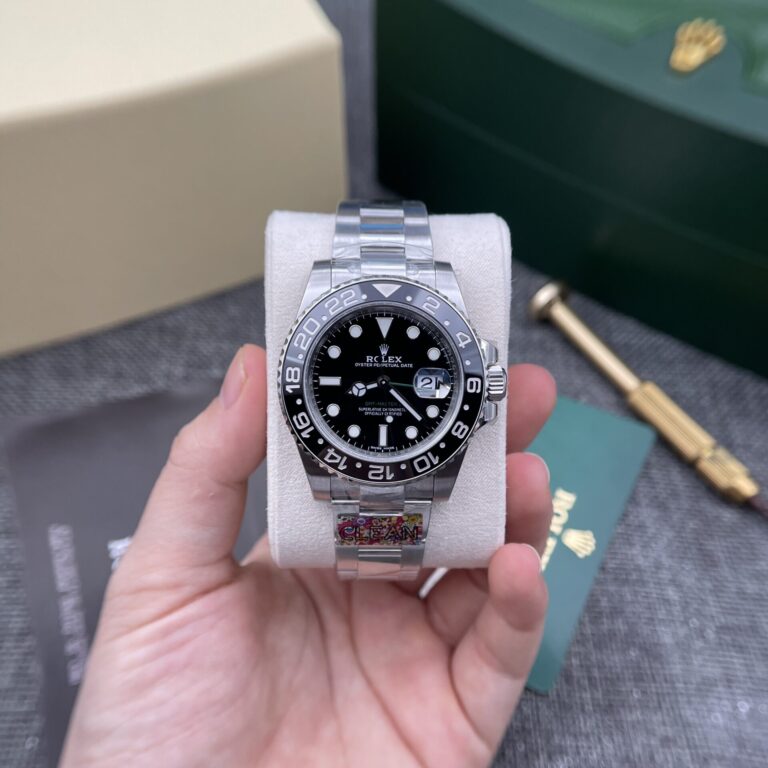
“GMT-Master II” covers watches that look close in a listing photo and feel quite different once the configuration changes. A Pepsi on Jubilee doesn’t carry itself like a Batman on Oyster. The left-handed Sprite moves the crown, crown guards, and date to the opposite side. Newer black-and-gray versions pull most of the color out of the bezel, putting more visual weight on the case, dial, and bracelet.
Write the combination down before looking at factories. For instance:
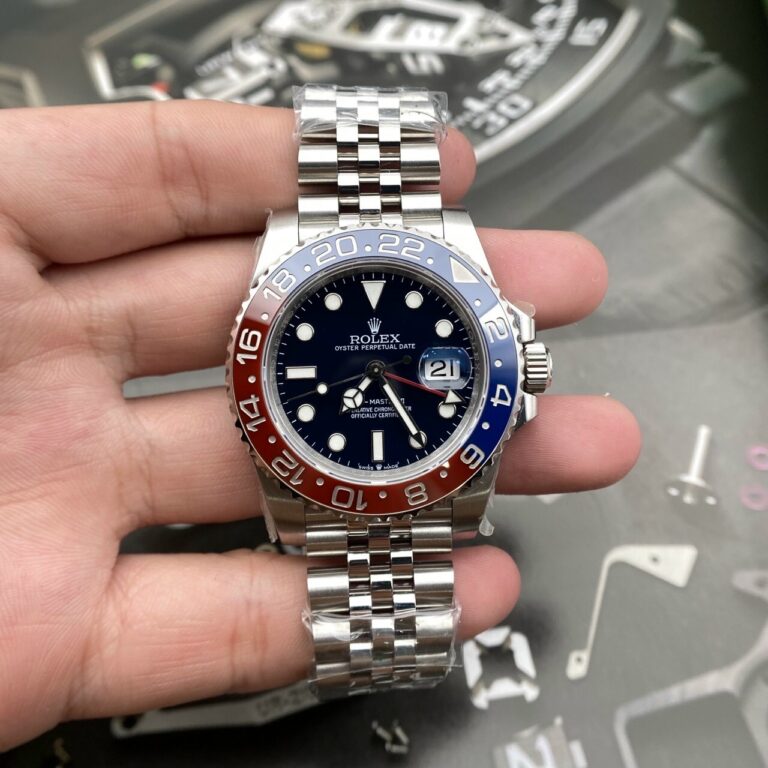
126710BLRO, Pepsi bezel, Jubilee bracelet.
Or:
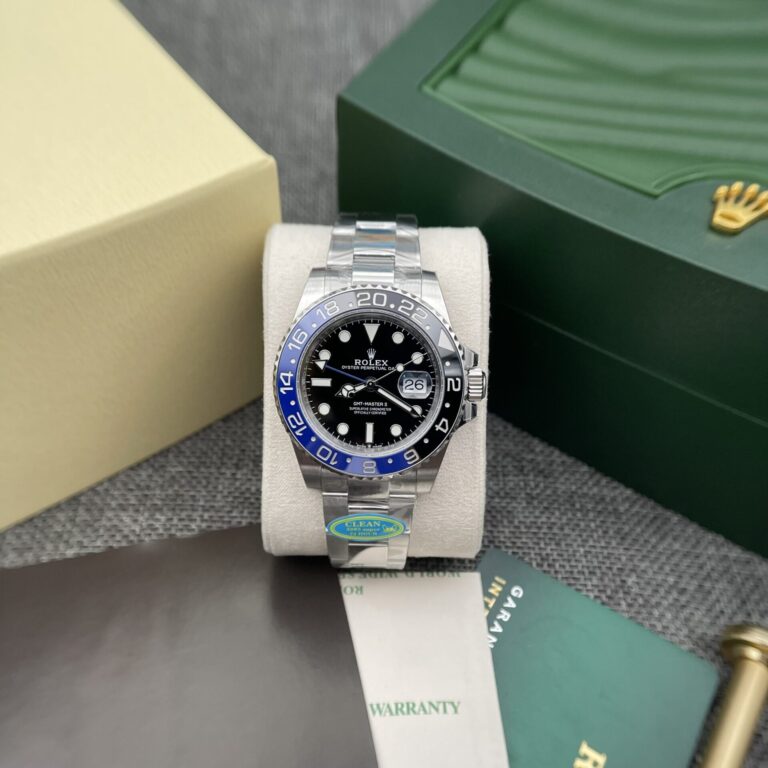
126710BLNR, blue-and-black bezel, Oyster bracelet.
Now the comparison has some discipline. A glowing review of one factory’s Pepsi may tell you very little about its Batman, its Sprite, or a different production batch. Buyers lean on a factory name too hard because it feels like a shortcut. It isn’t much of one unless the reference, bracelet, and movement are the same.
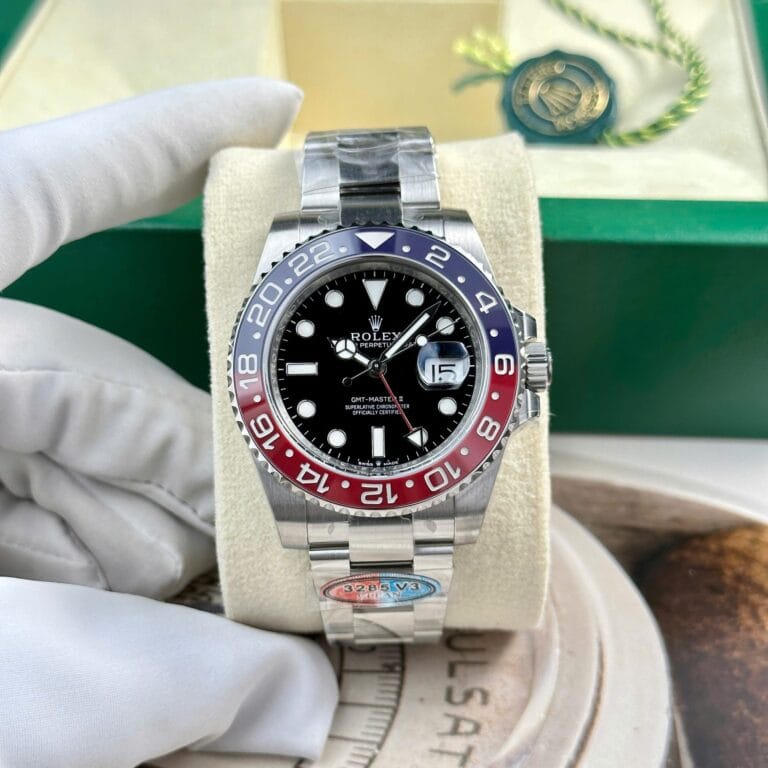
The Pepsi gets most of the attention, fairly enough. Red-and-blue ceramic sounds simple until you put different versions alongside each other. Blue can go too dark. Red can drift purple. The meeting line between colors may look soft, uneven, or oddly placed. It is a very visible part of the watch, and a mediocre insert keeps drawing the eye back to itself.
Lighting makes the job harder. Strong studio light can make a bezel look brighter and more saturated than it will indoors. A single supplier photo may flatten the differences between two versions that separate quickly in regular daylight or under office lighting.
Don’t compare color from memory. Put several photos next to each other if possible, including bright light, softer light, and angled views. Look closely at the transitions around 6 and 18 on the 24-hour scale. On a two-color ceramic insert, those meeting points register even when you aren’t deliberately inspecting them. A convincing Pepsi looks like one insert made in two colors, without the sense that two mismatched halves were forced together.
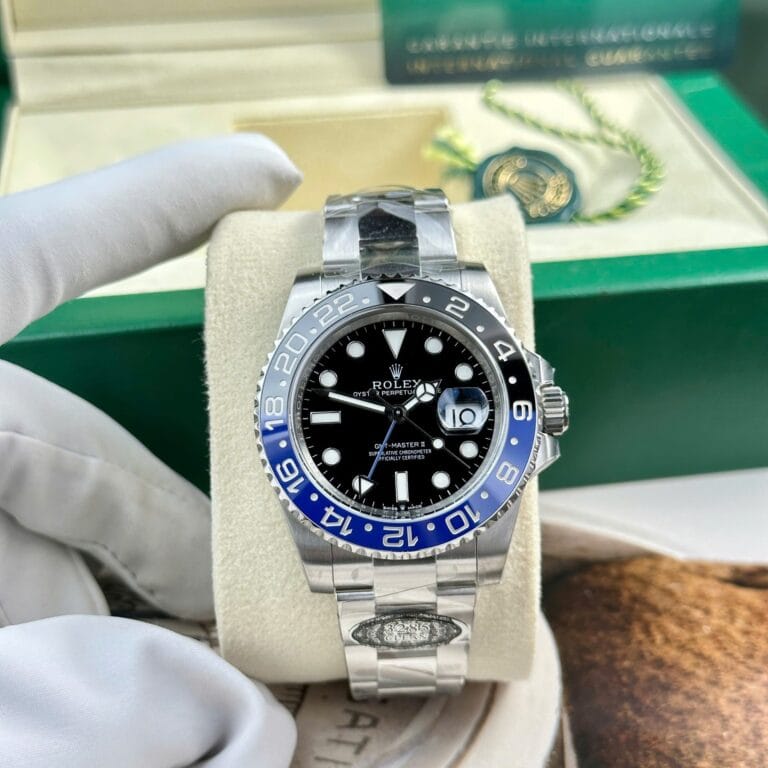
The blue-and-black GMT shows why bracelet choice deserves more than a passing glance. On an Oyster-style bracelet, the watch reads as a straightforward sports watch: broad links, broad brushed surfaces, less visual movement. Put the same dial and bezel combination on a Jubilee-style bracelet and the center links add texture, polish, and a lot more reflection.
The Batman and Batgirl nicknames are less useful than the actual specification. Look at the bracelet, clasp, and the way the first links leave the case, then judge the bezel and dial in that setting. A comparison centered on the Oyster version doesn’t automatically carry over to Jubilee, especially where bracelet finishing is a weak point on a particular build.
A GMT-Master II separates itself from an ordinary three-hand Rolex-style watch with the fourth hand. It makes one rotation every 24 hours and reads against the bezel for a second time zone. Getting the hand shape right in a photograph is the easy part. The operation is what exposes a weak movement.
Check the setup in sequence: set the watch, move the local hour, and watch the GMT hand. Then cross midnight. The date should respond to the local-hour change instead of acting like an unrelated display. This is more useful than staring at a red, blue, or green GMT hand in a listing image.
Higher-grade GMT-Master II builds get attention for reproducing the independently adjustable local-hour function. Rather than stopping the watch and resetting everything after changing time zones, the local hour moves independently while the GMT hand stays on reference time. That’s the point of the modern GMT-Master II arrangement.
When a listing names a 3285-style clone movement, use the crown before getting impressed by the caliber label. Move the local hour forward, then backward. Cross midnight in both directions and watch the date behavior. A movement description may say “3285,” while the crown positions engage vaguely or the local-hour jump feels rough on the individual watch. Those details are where the description earns its keep.
The date looks minor until the independent hour hand enters the picture. Move local time through midnight and the calendar should follow. Check it forward and backward, then inspect the date display as a display: is the numeral centered, and does the Cyclops line up cleanly?
Look at more than one date in video or across several QC photos. A neatly centered “8” says nothing about how “23” sits in the same window. The date aperture is small, though the GMT dial is clean enough that a crooked numeral remains easy to spot. People can spend an hour debating hand stack and overlook a date that looks wrong every day of the month.
GMT discussions get oddly obsessed with hand order. It does deserve inspection: the relationship among the hour, GMT, minute, and seconds hands changes the appearance of the center stack, especially from an angle. Check the center pinion and spacing. The hands shouldn’t look unnecessarily far apart.
Then move on. A convincing hand stack cannot rescue a poor bezel, awkward case, misplaced date, or unreliable GMT operation. It is one detail among several, and buyers sometimes turn it into the entire verdict because it is easy to point at in a macro photo.
The 24-hour bezel needs attention beyond color as well. Rotate it. The action should feel deliberate rather than vague. Check how the insert sits inside the bezel and look at bezel height from the side. An overly thick bezel makes the case look heavier than it should; an insert set too low creates a recessed ring around the dial.
Inspect the engraving around the full insert. The numerals should remain consistent, without a few characters turning conspicuously thick or shallow once light catches the filled markings. Start at ordinary viewing distance. Macro photographs have their place, just not before the overall watch has passed a normal look.
Crystals get a lot of attention on GMT replicas because they affect more than the date magnifier. The crystal changes dial clarity, reflection, the appearance of the black dial, and the profile around the bezel. A poor crystal can make a well-executed dial look flat or overly reflective.
Watch for glare in angled images. The Cyclops may distort the date or make its magnification feel off, while crystal height can alter the side profile around the bezel. One perfectly lit frontal photo hides most of this. The GMT-Master II already has polished case and bracelet details competing for light; a crystal that throws extra glare makes the watch look busier than it needs to.
The bracelet choice isn’t cosmetic. Oyster uses broader links and a simpler pattern, so brushing, edge finishing, and the size of the link surfaces are easier to see. Jubilee has more individual surfaces, more articulation, and more polished sections catching light.
On a Jubilee, inspect the transition from the case into the first links, how freely the links move, and whether the polished pieces look consistent. On Oyster, large brushed areas reveal uneven finishing quickly. Clasp operation deserves a look on either version. A strong case paired with a poorly fitted bracelet stops feeling convincing fast.
The GMT-Master II is commonly worn as an everyday sports watch, so bracelet comfort keeps coming up after the initial inspection. A slight awkwardness at the first link or clasp isn’t a one-time visual issue. It is something on the wrist every time the watch goes on.
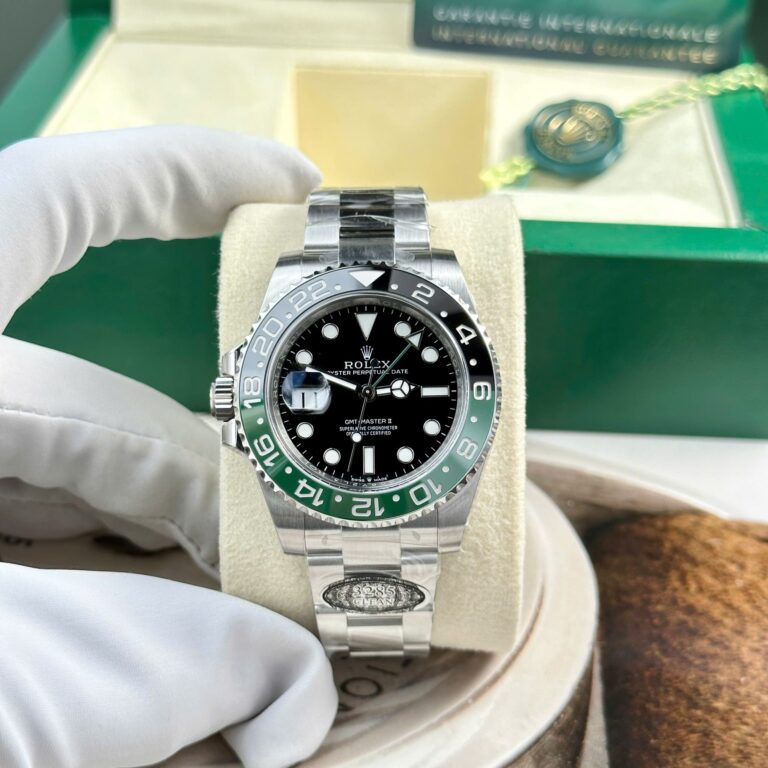
The green-and-black left-handed GMT is not simply a Batman in another color. The crown and date move to the opposite side, shifting the visual balance of both dial and case. It also gives a replica more opportunities to look strange if the date, Cyclops, crown, or crown guards are not positioned cleanly.
Compare a Sprite build against the actual Sprite configuration, not against a conventional right-handed GMT. Listings are sometimes grouped by movement or factory while the reversed case orientation receives less attention than it deserves. Here, orientation is one of the defining features. Treat it that way.
The modern GMT replica market uses several labels associated with the 3285 layout. DD3285, VR3285, and other designations appear depending on factory and version. Those prefixes matter because two movements marketed around the same genuine caliber architecture are not necessarily the same clone movement.
Don’t reduce the comparison to:
“Does it say 3285?”
Look at the exact designation, then check independent local-hour adjustment, GMT tracking, date behavior, crown positions, winding, and power reserve. Those are the useful checks. Different 3285-style movements should be compared by how they function and what ownership looks like, not by the four digits they share.
Published power-reserve figures deserve the same skepticism. A seller’s stated number is a specification to verify on an individual watch, not an automatic result. Fully wind it, note the time, leave it alone, and see how long it runs. For daily ownership, consistent function is more useful than winning a paper comparison by a few hours.
Accuracy has a similar split. A short timegrapher clip provides useful information. Several days of normal use show something else: whether the watch keeps behaving consistently once it is off the timing machine and back in a routine.
Movement talk can take over a GMT page. Don’t let it. Look at the case from the side, check the crown guards, inspect the lug shape, and see how the bracelet enters the case. The GMT-Master II isn’t an especially huge watch, so unnecessary thickness becomes apparent quickly.
A blocky case changes the entire watch even if the bezel and movement are strong. The crown-side view is particularly helpful because it shows the relationship among crown, guards, bezel, crystal, mid-case, and bracelet in one shot. That image can tell you more than another dial close-up.
Factory names matter with Rolex GMT-Master II replica watches because factories differ in bezel color, movement, crystal, case, and bracelet work. Still, “Which factory makes the best GMT?” is too broad to answer usefully.
Start with a real target: 126710BLRO Pepsi, Jubilee bracelet. Or 126710BLNR, Oyster bracelet. Or 126720VTNR Sprite, Jubilee bracelet. Then compare the versions actually available. On a Pepsi, bezel color may be the biggest visual difference. On another configuration, movement version or bracelet finishing may carry more weight.
Factory reputation only helps once it is tied to the exact watch under discussion. Otherwise, it becomes a stand-in for looking closely.
Begin with the complete watch. Does the bezel color suit the reference? Does the case sit naturally with the bracelet? Is the dial balanced? After that, use the functions: check the local-hour jump, cross midnight, watch the date, confirm the GMT hand, and rotate the bezel.
Only then get into smaller visual details: hand stack, bezel engraving, crystal, Cyclops, marker alignment, and bracelet fit. This order keeps the inspection grounded in what the GMT-Master II is supposed to be: a visual replica with a functional second-time-zone setup. The fourth hand needs to do the job it was put there to do.
Narrow the watch down before comparing factory versions. Keep the reference and generation, bezel configuration, Oyster or Jubilee bracelet, exact 3285-style movement version, bezel color and transition, local-hour and date operation, crystal and Cyclops, and factory and batch in view.
A Pepsi on Jubilee and a Sprite on Oyster are both GMT-Master II models, though their main inspection points are not identical. ReplicaWatchesCo.com carries Rolex GMT-Master II replica watches across bezel combinations, bracelet options, clone movements, and factory versions. Start with the exact GMT you want, then inspect the appearance and the GMT function with the same care.
| Movement | |
| Case Material | |
| Diameter | |
| Thickness | |
| Bezel | |
| Crystal | |
| Power Reserve | |
| Waterproof |
Browse our collection of 1:1 CNC-milled clone timepieces and select a watch for precision regulation.
Explore The Collection →